What Is the Correct Way to Set Up Hitch Weight Distribution on a HorseTowPro System?
Proper hitch weight distribution is critical for safe towing with your HorseTowPro setup, as it prevents trailer sway, improves braking stability, and protects your tow vehicle’s suspension. This guide walks you through achieving optimal load balance, ensuring your horse trailer stays level and secure on the road. Follow these step-by-step instructions to avoid common pitfalls and maximize the lifespan of your equipment.
How Do I Measure My Current Tongue Weight for HorseTowPro?
Before adjusting your HorseTowPro hitch weight distribution system, you need to know your exact tongue weight. This ensures you select the right spring bars and avoid overloading the hitch receiver. Use a dedicated tongue weight scale for accuracy—place it under the trailer’s coupler with the trailer level. For most horse trailers built for two horses, a typical tongue weight falls between 450 kg (1,000 lbs) and 680 kg (1,500 lbs) when fully loaded with horses, tack, and water. Subtract the empty trailer weight from the total to get the net tongue weight. Record this number, as it determines the spring bar rating you’ll need—typically 500 kg, 750 kg, or 1,000 kg bars for the HorseTowPro system. If your tongue weight exceeds the truck’s hitch receiver class rating, refer to our HorseTowPro Hitch Receiver Class Ratings: Choosing the Right Hitches for Your Trailer article to upgrade accordingly.
Which Spring Bar Capacity Should I Choose for My HorseTowPro Setup?
Selecting the correct spring bar capacity is essential for optimal load distribution. HorseTowPro offers spring bars in 500 kg, 750 kg, and 1,000 kg ratings, corresponding to tongue weight ranges. As a rule of thumb, pick bars rated for 10–15% more than your measured tongue weight to accommodate any uneven loading. For example, if your tongue weight is 600 kg, choose 750 kg bars. Avoid undersizing, as this leads to insufficient load transfer and potential trailer sway; oversizing can cause a harsh ride and reduced hitch articulation. The table below outlines recommended spring bar capacity per trailer type and tongue weight range.
| Trailer Type (Typical Load) | Tongue Weight Range (kg) | Recommended HorseTowPro Spring Bar Capacity (kg) |
|---|---|---|
| Single-horse trailer (light, no water) | 200–350 | 350 |
| Two-horse trailer (full load, water tank) | 400–650 | 650 or 1,000 |
| Three-horse gooseneck (heavy) | 700–900 | 1,000 |
| LQ trailer (living quarters) | 600–800 | 800 or 1,000 |
How Do I Adjust the Tension on HorseTowPro’s Weight Distribution Bars?
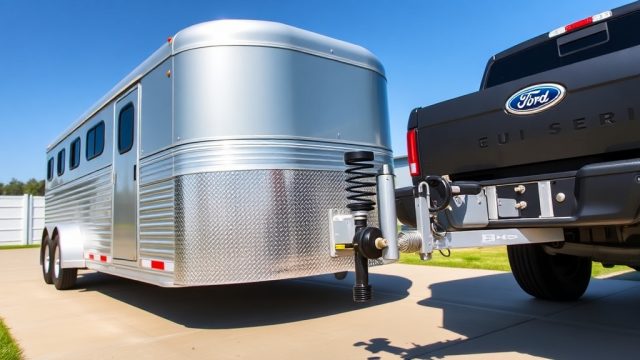
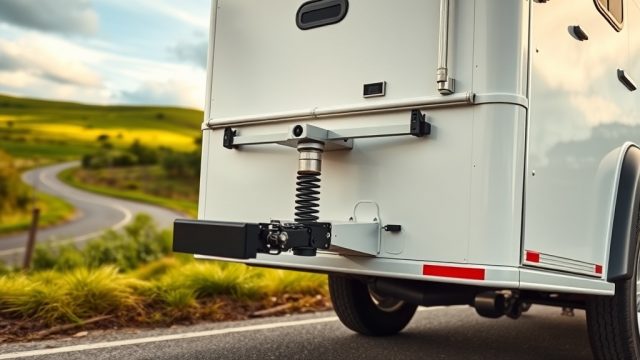
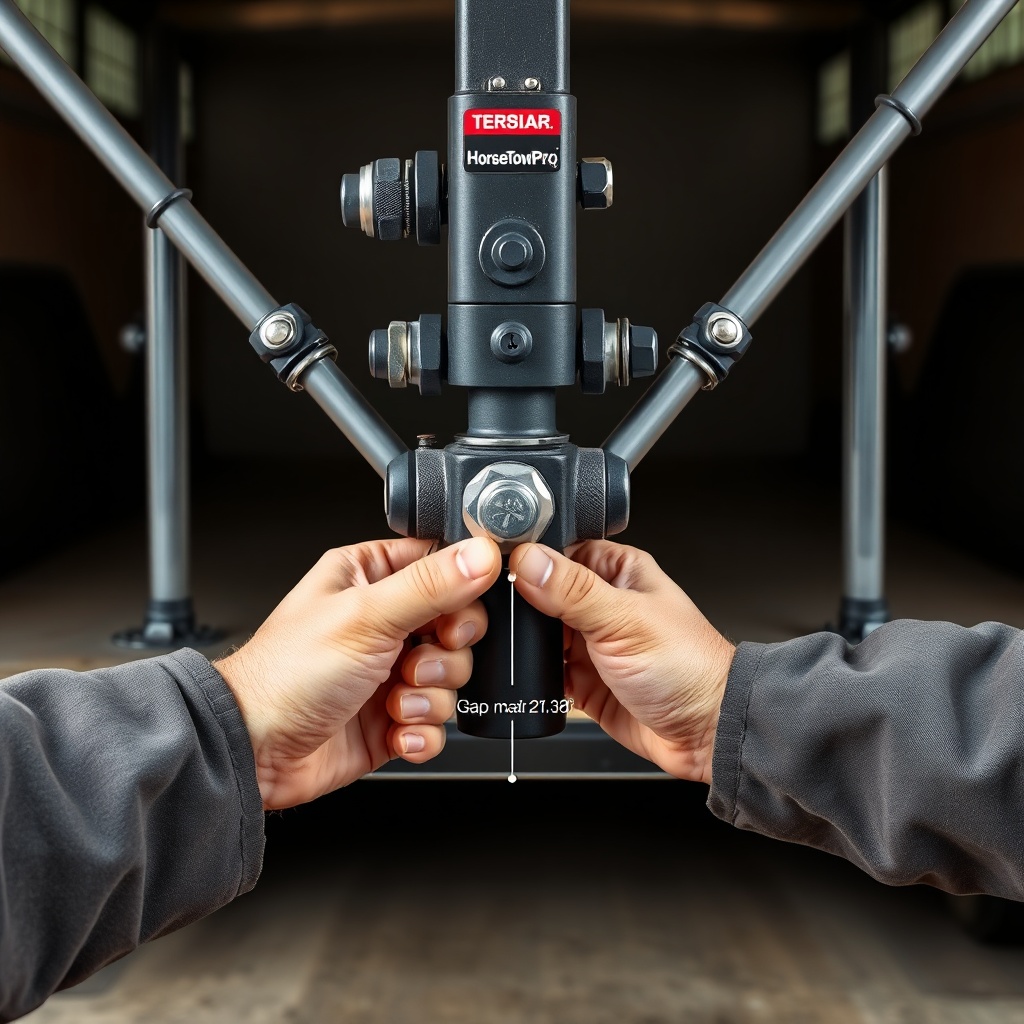
Once you have the correct spring bars, tension adjustment is the next step. Park your truck and trailer on level ground. Attach the HorseTowPro hitch head to your vehicle’s receiver, then hook the spring bars into the snap-up brackets on the trailer’s A-frame. Use a wrench to turn the adjustment nuts on the hitch head’s tilt mechanism—tighten clockwise to increase spring bar tension, which lifts the trailer’s nose and transfers weight to the front axle. A good starting point is 5–7 full turns from the fully loose position. Then, manually lift the spring bars’ free ends with the provided lever—they should sit about 2.5–5 cm (1–2 inches) below the trailer frame when fully engaged. If they’re too low, add tension; if too high, reduce tension. You’ll know it’s correct when the tow vehicle’s front wheel well gap decreases by 1–2 cm (0.5–1 inch) relative to the rear—this indicates the front axle is carrying proper load. For detailed calculation steps, check our HorseTowPro Hitch Weight Distribution Calculator: How to Balance Your Load.
What Are the Common Signs of Improper Weight Distribution on a HorseTowPro System?
Misadjusted weight distribution can lead to several warning signs while towing. Look for these cues: the tow vehicle’s front end sits higher than the rear (distributed weight too low), or the trailer’s nose dips forward (too much weight on the hitch). On the road, you may experience trailer sway at speeds above 80 km/h (50 mph), harsh steering response, or the truck’s suspension bottoming out on bumps. Another telltale is excessive brake dive—if the front brakes lock prematurely, the front axle is overloaded. To diagnose, measure your truck’s front and rear bumper heights unloaded, then with the trailer hitched but spring bars disconnected, and finally with spring bars engaged—the front bumper should rise no more than 1.3 cm (0.5 inches) from unloaded height. If it rises more, add tension; if it drops below unloaded, reduce tension. Ignoring these signs can accelerate wear on your HorseTowPro Trailer Maintenance Checklist: Preventing Common Issues, so address them promptly.
How Do I Maintain My HorseTowPro Weight Distribution Hitch for Long-Term Performance?
Regular maintenance extends the life of your HorseTowPro system. After every tow, clean the spring bars and hitch head with a soft brush to remove road salt and debris. Apply a thin coat of lithium-based grease to the ball mount and spring bar sockets monthly—or more often in wet conditions. Inspect the spring bar ends for cracks or bending after heavy hauls; replace if any deformation is visible. Check the snap-up bracket pins for rust—they should move freely without binding. Every 6 months, use a torque wrench to verify that all bolts on the hitch head and receiver are tightened to the manufacturer’s specs (typically 120 Nm or 90 ft-lb). Also, inspect the receiver tube for ovalization—a sign of overload that may require replacement. For tire care related to weight distribution, see our HorseTowPro Tire Care Guide: Extending Lifespan and Ensuring Safety. Proper maintenance not only ensures safety but also keeps your setup compliant with Australian towing regulations.
What Do HorseTowPro Owners Say About Their Weight Distribution Setup?
HorseTowPro users consistently praise the system’s ability to eliminate sway and improve ride quality. Lisa M. from Victoria, Australia, reports: “After installing the 750 kg bars on my two-horse gooseneck, I no longer feel jackknife fear on winding roads. The truck sits level even with 500 litres of water in the tank.” Another owner, Tom H. from Queensland, notes: “I used to struggle with front-end lightness—my dually would wander on highways. HorseTowPro’s hitch weight distribution solved it in one afternoon. My brake controller (see HorseTowPro Brake Controller Installation: Step-by-Step Guide) now works more consistently because the trailer is balanced.” A third review from Sarah K., a professional horse transporter, states: “I’ve towed over 50,000 km with this system and have only needed to adjust tension twice. The build quality is solid, and the customer support helped me choose the right bars via their calculator tool. Highly recommend for anyone serious about horse trailer safety.” These firsthand experiences underline the importance of correct setup for peace of mind.
Frequently Asked Questions About HorseTowPro Hitch Weight Distribution
1. Can I use HorseTowPro spring bars with a different hitch brand?
No, HorseTowPro spring bars are designed specifically for their compatible hitch heads and snap-up brackets. Mixing brands can cause misalignment and unsafe load transfer. Always use the full HorseTowPro system for warranty protection.
2. How often should I check the torque on my HorseTowPro hitch bolts?
Check all bolts every 2,000 km (1,200 miles) or before each long trip—whichever comes first. Use a calibrated torque wrench set to the recommended 120 Nm (90 ft-lb) for the hitch head and receiver.
3. What is the maximum tongue weight my HorseTowPro system can handle?
This depends on your spring bar capacity and receiver class. With 1,000 kg bars and a Class V receiver, the maximum recommended tongue weight is 900 kg. Always derate by 10% from the bar’s capacity for safety margins.
4. Can I tow a 3-horse trailer with a HorseTowPro weight distribution hitch?
Yes, if your trailer’s tongue weight is within the system’s limits. For a 3-horse gooseneck trailer with a tongue weight up to 900 kg, use 1,000 kg spring bars and ensure your tow vehicle has a Class V hitch receiver (see our class ratings guide).
5. How do I store my HorseTowPro spring bars when not in use?
Store them in a dry place, ideally hanging vertically to prevent moisture accumulation. Apply a light coat of WD-40 or corrosion inhibitor before storage if they will sit for more than 2 months.
6. Does the HorseTowPro system affect my truck’s reverse assist sensors?
No, the spring bars and hitch head are located behind the bumper and should not interfere with reverse sensors. However, if you have a rearview camera, check that the spring bar ends do not obscure the lens when under tension.