Why Is Proper Hitch Weight Distribution Critical for the Featherlite 8541?
The Featherlite 8541 is a well-regarded gooseneck livestock trailer designed for hauling horses, cattle, or mixed cargo. However, optimal towing performance and safety hinge on correct hitch weight distribution. Without proper setup, you risk trailer sway, reduced steering control, and excessive wear on both your tow vehicle and trailer. For a thorough understanding of its capabilities, see our Exiss CT 300 vs Featherlite 8541: Towing Capacity and Payload Comparison.
This article walks you through a step-by-step setup process for achieving the ideal 20–25% pin weight for the Featherlite 8541, using practical measurements and adjustments. We focus on real-world numbers—in US dollars and pounds—to keep your rig balanced on the road.
What Is the Recommended Pin Weight for the Featherlite 8541?
For the Featherlite 8541, industry best practice recommends pin weight—the downward force exerted by the trailer’s gooseneck hitch onto the tow vehicle—between 20% and 25% of the trailer’s loaded weight. The Featherlite 8541 has a GVWR of 15,400 pounds, so with a typical loaded weight of 12,000 to 14,000 pounds, target pin weight falls between 2,400 and 3,500 pounds. Exceeding 25% can overload the tow vehicle’s rear axle; below 20% invites trailer sway.
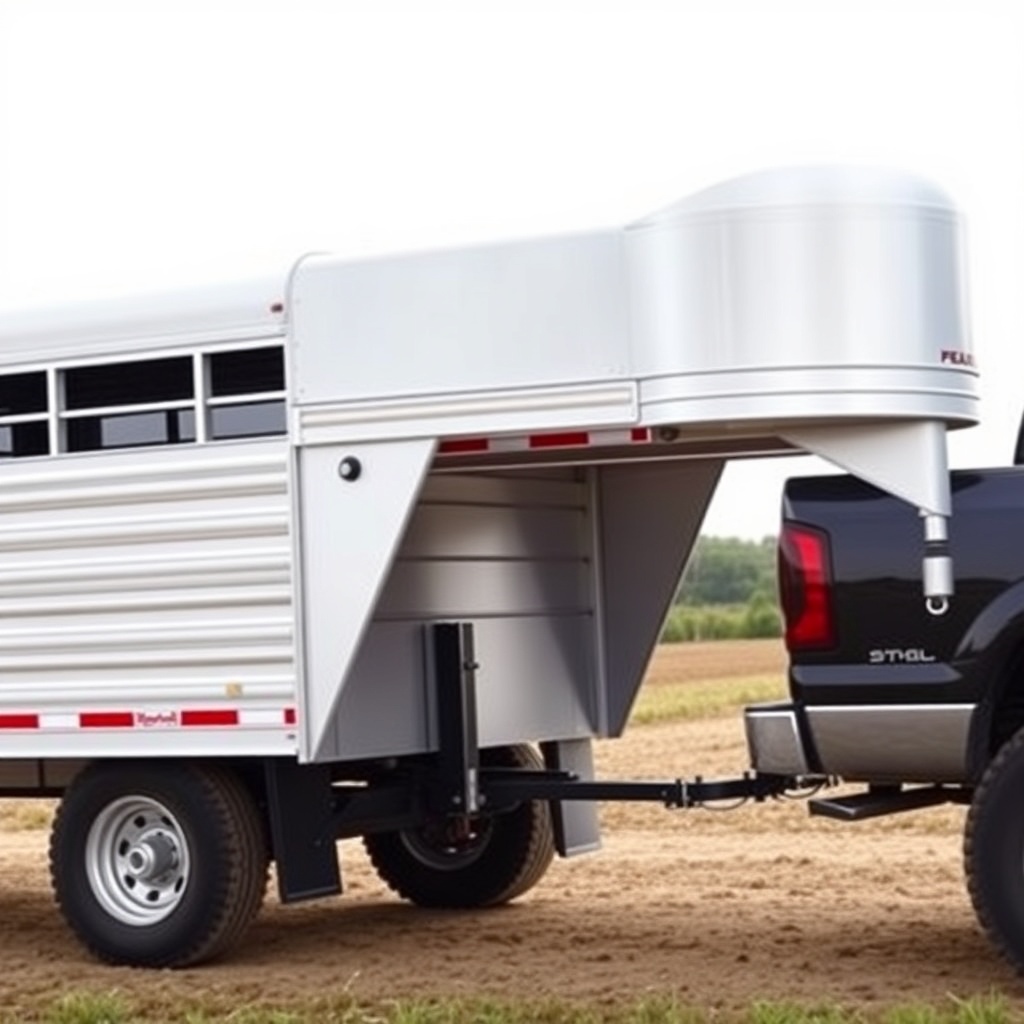
To verify your setup, use a certified tongue weight scale at a truck stop or invest in a portable hitch scale. For a detailed step-by-step guide, refer to our Featherlite 8541 Hitch Weight Distribution: Setup for Stability.
How Do I Calculate Ideal Load Balance for the Featherlite 8541?
Load balance begins with understanding the trailer’s center of gravity. The Featherlite 8541 features a 7-foot 6-inch width and an 8-foot gooseneck, with axle placement designed for even distribution when loading horses or cargo. For a typical two-horse load (each horse averaging 1,200–1,400 pounds), position the horses as close to the axles as possible—ideally centered over or slightly ahead of the axle center line—to maintain pin weight within the target range.
A practical method: load your trailer to its typical operating weight, park on level ground, and measure the distance from the trailer’s rear axle to the hitch pin. Most Featherlite 8541 units have a 7-foot 6-inch axle spacing, so the pin sits roughly 4–5 feet ahead of the front axle. A general rule: for every 100 pounds of cargo moved 1 foot forward of the axles, pin weight increases by about 10 pounds. Conversely, shifting weight rearward lightens the pin load. Note that empty trailers often have lower pin weight—around 15–18% of empty weight—so a loaded balance check is essential.
What Equipment Do I Need to Adjust Featherlite 8541 Hitch Weight Distribution?
Proper adjustment requires a few tools and accessories. Below is a specification table for equipment commonly used with the Featherlite 8541:
| Equipment | Purpose | Recommended Specs | Approximate Cost (USD) |
|---|---|---|---|
| Gooseneck hitch (tow vehicle) | Secure coupling with trailer’s coupler | Pulling capacity >20,000 lbs; 2–4 inch ball | $200–$600 |
| Portable scale (e.g., Sherline or Weigh Safe) | Measure pin weight | Range 0–5,000 lbs; ±1% accuracy | $150–$400 |
| Ball mount with adjustable height | Fine-tune hitch height and angle | Drop/rise 2–6 inches; rated >25,000 lbs | $100–$300 |
| Torque wrench | Verify hitch bolt torque | 3/4-inch drive; 250 ft-lbs min | $80–$200 |
| Load-distribution bars (if using weight-distribution system) | Transfer load to front axle | Rated for pin weight 2,000–4,000 lbs | $250–$600 |
Always verify compatibility with your tow vehicle’s payload capacity—most ¾-ton or 1-ton trucks handle the Featherlite 8541 well, but a Featherlite 8541 Tire Pressure Guide: Optimal PSI for Safe Towing helps ensure you maximize traction and braking.
How Do I Perform a Step-by-Step Hitch Weight Distribution Setup?
Follow these five steps for accurate setup:
Step 1: Measure unloaded trailer pin weight. Park the trailer on level ground, unload all horses and gear. Use a portable scale under the gooseneck coupler. Record the reading—e.g., 1,200 pounds (typical for an empty Featherlite 8541 at 8,000 pounds empty weight with 15% pin weight).
Step 2: Load the trailer to typical operating weight. Load horses, tack, and hay per your normal pattern. Measure again—the pin weight should now be between 2,400 and 3,500 pounds. If outside this range, continue to step 3.
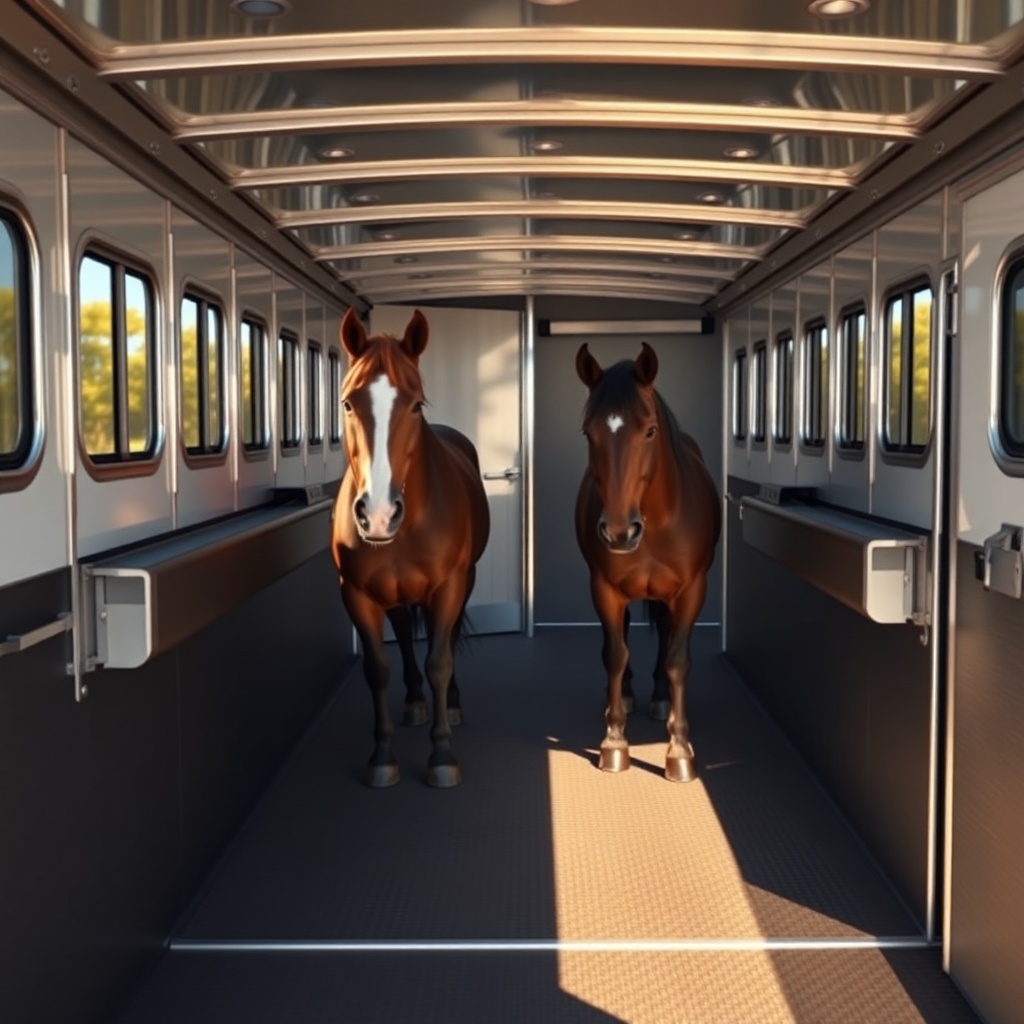
Step 3: Adjust cargo position. If pin weight is too high (over 3,500 pounds), move heavy items (hay bales, water tanks) rearward behind the axles. If too low (under 2,400 pounds), shift heavier items forward of the axle center. Use gradual adjustments of 6–12 inches and remeasure. For a detailed guide on safe loading techniques, read our Featherlite 8541 Loading and Unloading Tips: Maximizing Safety and Efficiency.
Step 4: Check hitch height and angle. With the trailer loaded, the gooseneck coupler should sit level with the truck bed. If the trailer angles upward at the front, it reduces pin weight; if it angles downward, it increases pin weight. Adjust the ball mount drop/rise accordingly—most 4-inch drop mounts work well with ¾-ton trucks.
Step 5: Test drive and fine-tune. Drive a short route (5–10 miles) at highway speed, including curves and moderate braking. Monitor trailer sway and truck handling. If you notice oscillations, increase pin weight slightly by moving cargo forward (10–15 pounds per foot). For electronic assistance, consider Featherlite 8541 Electric Brake Controller Upgrade Options: Modern vs. Legacy Systems for better braking stability.
What Are the Common Mistakes When Setting Up Hitch Weight Distribution on the Featherlite 8541?
Many users overlook these pitfalls:
- Ignoring tire pressure: Underinflated rear tires on the tow vehicle reduce hitch support. Always inflate to maximum sidewall pressure when towing.
- Using a single measurement: Always check pin weight both empty and loaded—variations can be significant.
- Overloading the truck’s payload: Verify the tow vehicle’s payload rating (door sticker) exceeds your pin weight plus passengers and gear.
- Skipping the torque check: Gooseneck ball and hitch bolts must be torqued to manufacturer specs (often 250–300 ft-lbs).
If you encounter electronic issues during use, our Featherlite 8541 Brake Controller Troubleshooting: Common Issues and Fixes provides targeted solutions.
What Owners Say About Hitch Weight Distribution on the Featherlite 8541
Experienced owners highlight the importance of the Featherlite 8541’s low center of gravity, which contributes to stable towing when pin weight is correct. One owner reported that after shifting hay bales from the front to the rear of the living quarters (a 200-pound adjustment), pin weight dropped from 3,800 pounds (too high) to 2,900 pounds (ideal). Another owner noted that a weight-distribution system with friction sway control improved towing confidence in crosswinds. However, several users caution that heavy tongue cargo—like spare tires mounted on the front—can push pin weight past safe limits, requiring counterweights or repositioning.
The consensus: the Featherlite 8541 tows best when pin weight sits around 22–24% of loaded weight. Many recommend a portable scale as a must-have tool for first-time setups. A common tip from owners: mark optimum cargo positions with tape or ink inside the trailer for repeatable loading.
Frequently Asked Questions
1. Can I use a weight-distribution hitch with the Featherlite 8541’s gooseneck system?
Yes, many aftermarket weight-distribution systems are designed for gooseneck trailers, using spring bars that transfer load from the rear axle to the front axle of the tow vehicle. Ensure the system’s capacity matches your pin weight (typically 2,000–4,000 pounds) and that it’s compatible with your truck’s frame.
2. What is the empty pin weight of the Featherlite 8541?
Empty pin weight varies based on configuration, but a standard model with living quarters or tack area ranges from 1,000–1,400 pounds, representing 13–15% of the empty weight (approximately 7,500–8,500 pounds).
3. How do I know if my tow vehicle can handle the Featherlite 8541’s pin weight?
Check your truck’s payload rating on the door sticker (usually a yellow placard). Subtract the weight of passengers, cargo, and any aftermarket accessories. The result must exceed your loaded pin weight (2,400–3,500 pounds). A ¾-ton truck with a payload of 3,500–4,500 pounds typically suffices, but verify with your manufacturer.
4. Should I measure pin weight on a slope or level ground?
Always on level ground. A slope can skew measurements by 10–20% due to angle forces. Use a long level across the trailer frame or truck bed to confirm level.
5. Can I adjust pin weight by moving the hitch ball position?
Gooseneck hitches have a fixed ball position in the truck bed; moving cargo inside the trailer is the primary method. However, some sliding hitches allow you to reposition the ball forward or backward by 1–2 inches, offering minor adjustments. Most setups rely on cargo redistribution.
6. What happens if I exceed the 25% pin weight recommendation?
Excessive pin weight can overload the truck’s rear axle, causing steering issues, reduced braking effectiveness, and potential tire blowouts. It may also exceed the hitch’s rated capacity, leading to structural failure. Always measure and adjust within the 20–25% range.