What Is the Correct Tire Pressure for a Featherlite 8541 Trailer?
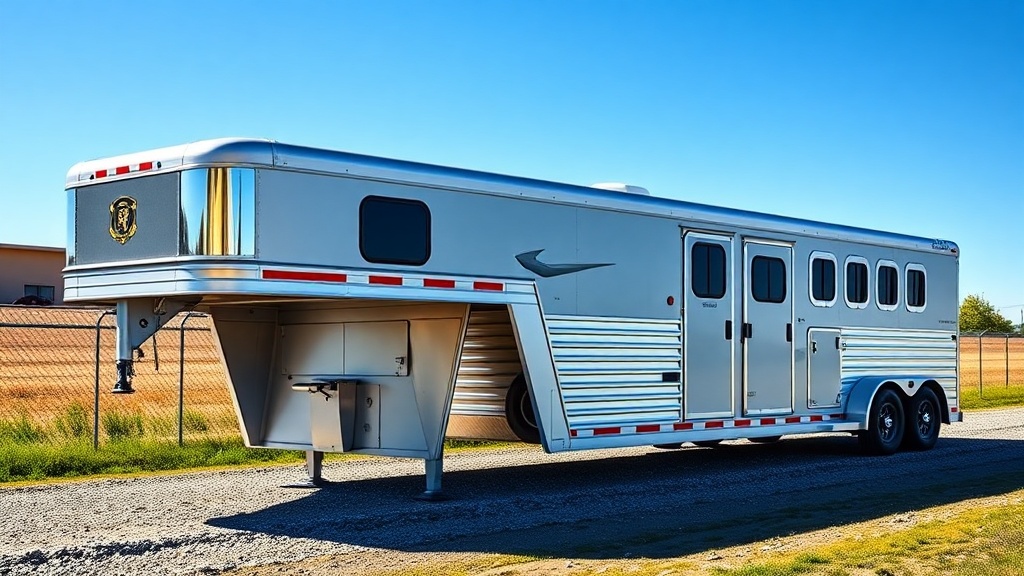
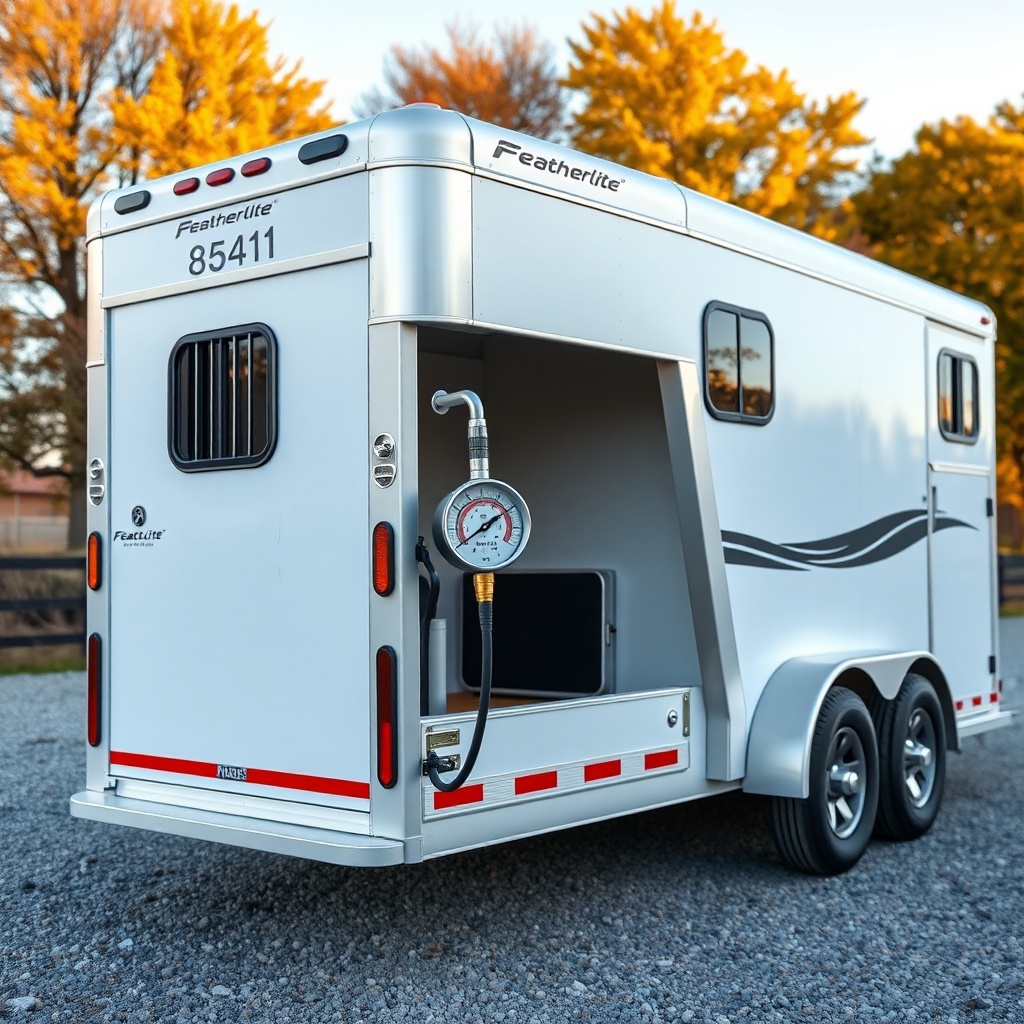
Maintaining the proper tire pressure in your Featherlite 8541 horse trailer is not just about comfort—it is a critical safety requirement for towing. Underinflated tires generate excessive heat, leading to blowouts, while overinflated tires reduce traction and increase wear. For the Featherlite 8541, a popular gooseneck model, the recommended cold tire pressure is typically 80 PSI on both the front and rear axles, though this can vary by tire brand and load. This guide provides precise PSI values, seasonal adjustments, and real-world owner insights to keep your trailer stable and your horses safe on the road.
Before adjusting pressure, always check the sidewall of your specific tires—usually ST235/80R16 or similar—and confirm the load rating. The Featherlite 8541’s gross vehicle weight rating (GVWR) is 11,500 lbs, so tires must support that load at the correct pressure. Below, we break down how to set PSI for different scenarios, including towing at near-maximum capacity versus lighter loads.
What Is the OEM Recommended Tire Pressure for Featherlite 8541?
Featherlite specifies a cold tire pressure of 80 PSI for the 8541 model when equipped with standard ST235/80R16 tires. This pressure ensures optimal load distribution across the 7,000-lb axles. However, if you’ve upgraded to larger tires—such as LT265/75R16—the recommended PSI may drop to 70–75 PSI to accommodate the different construction and sidewall stiffness. Always cross-reference with the Tire and Rim Association guidelines for your exact tire model.
For vehicles towing at lighter loads—for instance, with only two horses and minimal gear—some owners reduce pressure to 75 PSI to soften the ride. While this is acceptable, never go below 65 PSI on any tire, as that risks sidewall flexing and internal damage. Featherlite also recommends checking pressure when tires are cold (before driving more than 2 miles) for accuracy.
How Does Load Weight Affect Tire Pressure in Featherlite 8541?
The Featherlite 8541’s tire pressure directly correlates with the payload you carry. At the maximum GVWR of 11,500 lbs, each of the four tires (assuming a dual-axle setup) must bear about 2,875 lbs. At 80 PSI, ST235/80R16 tires typically support 3,030 lbs per tire at 80 PSI—giving you a safety margin. If you load only 8,000 lbs (two horses plus tack), each tire carries roughly 2,000 lbs, and you can safely reduce pressure to 75 PSI for a smoother ride. However, never exceed the maximum pressure stamped on the tire sidewall (typically 110 PSI for ST tires).
Here’s a quick reference table for common load scenarios:
| Total Trailer Load (lbs) | Recommended Rear Tire PSI | Recommended Front Tire PSI | Notes |
|---|---|---|---|
| 8,000 (light load) | 70–75 | 70–75 | Softer ride; check wear monthly |
| 9,500 (moderate load) | 75–80 | 75–80 | Balanced for most towing |
| 11,500 (maximum GVWR) | 80 | 80 | Do not exceed sidewall max |
| 12,000 (overloaded – not recommended) | 85* | 85* | *Only if tires rated > 110 PSI; not safe for standard ST tires |
During hot weather, tire pressure can increase 5–7 PSI due to heat expansion. Always adjust when tires are cold. For towing heavy loads in summer, set to 80 PSI cold; the rise to ~85 PSI is normal and within safe limits for most tires rated to 110 PSI.
What PSI Should I Use in Different Seasons or Road Conditions?
Seasonal temperature swings directly affect tire pressure. For every 10°F drop in ambient temperature, tire pressure decreases about 1–2 PSI. Thus, if you set 80 PSI in summer (80°F) and tow in winter (30°F), you might start at only 72–75 PSI—dangerously low. Featherlite 8541 owners in colder climates should check pressure more frequently and add air proactively.
For wet or snowy roads, slightly lower pressure (75 PSI cold) can improve traction, but be cautious—underinflation raises rolling resistance and heat. On rough gravel roads, maintaining 80 PSI reduces sidewall pinch flats. For long highway trips at 60–70 mph, always use the maximum recommended pressure (80 PSI) to minimize heat buildup and tire fatigue.
If you’re towing a Featherlite 8541 with a weight distribution hitch, ensure the trailer’s tires are at 80 PSI to maintain proper axle alignment. Uneven tire pressure can cause sway—a dangerous condition that a weight distribution hitch is designed to counteract.
How Do I Check and Adjust Tire Pressure for Safe Towing?
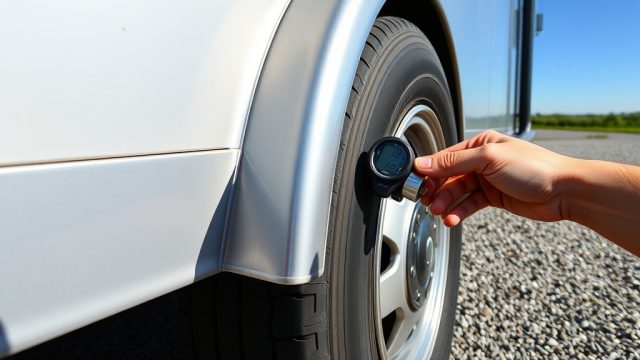
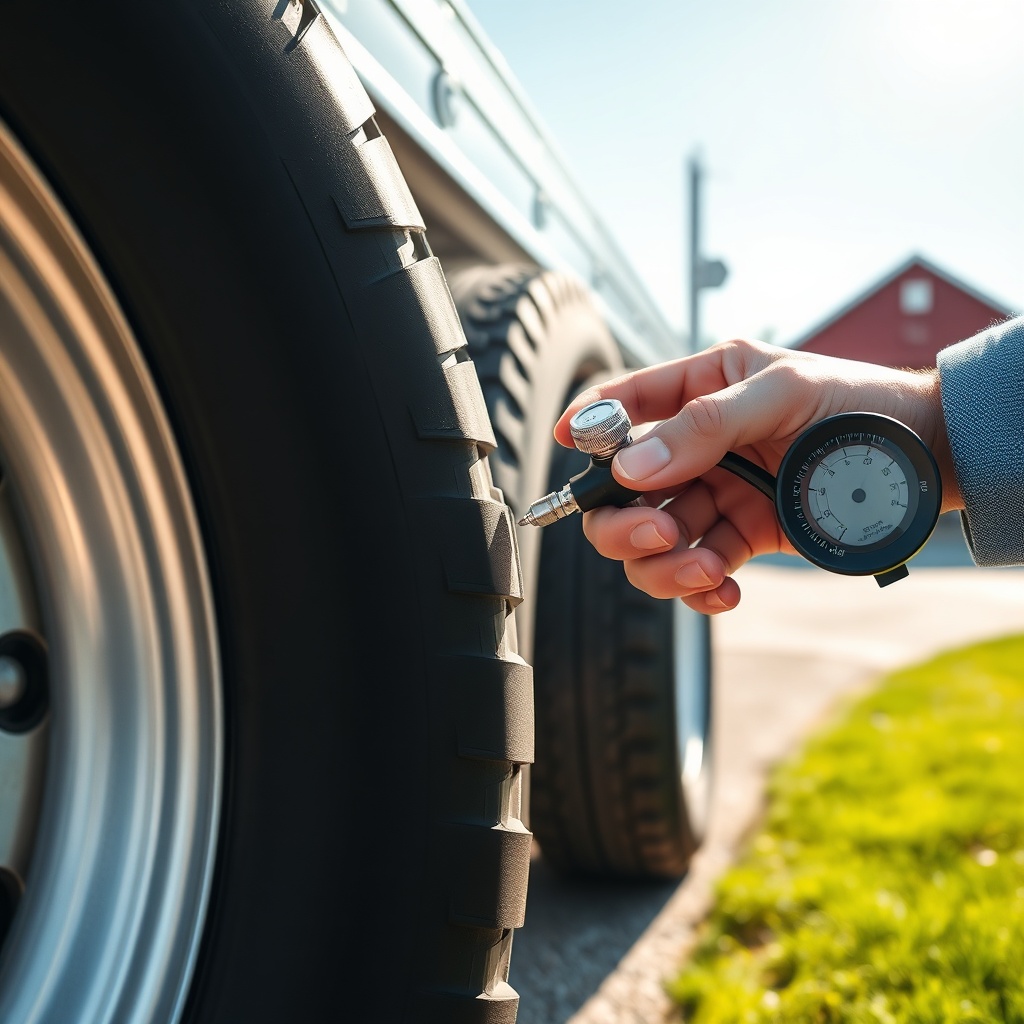
Use a high-quality digital tire gauge—preferably one that reads to 100 PSI—for accuracy. Check pressure when tires are “cold” (before driving more than 2 miles). Featherlite 8541 trailers have single rear wheels on each side, so simply remove the valve cap, press the gauge firmly, and note the reading. Compare to the recommended 80 PSI. If you discover a tire is at 65 PSI, add air gradually, then recheck. Never “bleed” hot tires; wait for them to cool.
For consistency, keep a log of tire pressures before each trip. Also inspect tires for cracks, bulges, or embedded debris. The Featherlite 8541 brake controller compatibility should also be checked to ensure your electric brakes aren’t causing excessive heat near wheels, which could affect tire pressure.
One common mistake: assuming the spare tire is inflated to the same PSI. Spares often get neglected; check it monthly and keep at 80 PSI as well. Use a crossover pattern when rotating tires (every 5,000 miles) to promote even wear.
What Are Common Featherlite 8541 Tire Pressure Mistakes?
Many owners mistakenly inflate tires to the PSI listed on the tire sidewall—often 110 PSI—rather than the trailer manufacturer’s recommendation of 80 PSI. This overinflates the tires, causing a harsh ride and uneven wear in the center of the tread. Another error is assuming all four tires need the same pressure when one may be carrying more weight due to uneven loading of the horses.
For example, if you place a heavy draft horse on the left stall and a lighter horse on the right, the left-side tires may need 80 PSI while the right-side can be at 75 PSI. Check your loading plan against the Exiss CT 300 vs Featherlite 8541: Towing Capacity and Payload Comparison to understand axle load differences. Additionally, never mix tire brands or types on the same axle; this leads to traction imbalances and pressure inconsistencies.
What Owners Say About Featherlite 8541 Tire Pressure
Long-time Featherlite 8541 owner David W. from Texas notes, “I’ve towed my 8541 for five years—always at 80 PSI cold. The tires wear evenly and I’ve never had a blowout, even when hauling two warmbloods and gear.” Another owner, Sarah M. from Colorado, shares: “We live in the mountains and face big temperature swings. I keep a portable compressor and adjust between 75–80 PSI depending on the season. My local tire shop confirmed that’s fine for our ST235 tires.”
However, some owners report that the stock tires feel stiff at 80 PSI. “The ride is rough on gravel roads,” says Jeff T. “I drop to 72 PSI for back roads, then pump back up for highway.” Featherlite recommends caution with this approach—always return to 80 PSI for highway speeds. Overall, the consensus is that 80 PSI is the safe baseline, with adjustments only for weight or terrain as long as you remain above 65 PSI.
Frequently Asked Questions
1. Can I use LT tires instead of ST tires on my Featherlite 8541?
Yes, but LT tires require different PSI—typically 70–75 PSI—due to their stiffer sidewalls. ST tires are designed for trailers and have higher load ratings at 80 PSI. If you switch to LT, reduce pressure by 5–10 PSI but stay above 65 PSI.
2. How often should I check tire pressure on my Featherlite 8541?
Check before every trip, and at least once monthly when stored. Pressure can drop 2–3 PSI per month naturally. After long storage, always check before towing.
3. What happens if I tow with tire pressure below 65 PSI?
Underinflation causes sidewall overheating, which can lead to blowouts. It also reduces fuel economy and steering response. Never tow below 65 PSI on any tire for the Featherlite 8541.
4. Does the Featherlite 8541’s tire pressure affect brake performance?
Yes. Proper tire pressure ensures consistent contact with the road, which helps brake controllers work efficiently. For more on this, read our Featherlite 8541 Brake Controller Compatibility guide.
5. Should I inflate my spare tire to the same PSI?
Yes, inflate the spare to 80 PSI as well. Spares often sit for years and lose pressure; check it at least quarterly to ensure it’s ready.
6. Can tire pressure affect trailer sway?
Absolutely. Uneven tire pressure—especially on the front axle—can cause random steering forces, leading to sway. Maintain 80 PSI on all tires for stability. Using a weight distribution hitch further reduces sway risk.