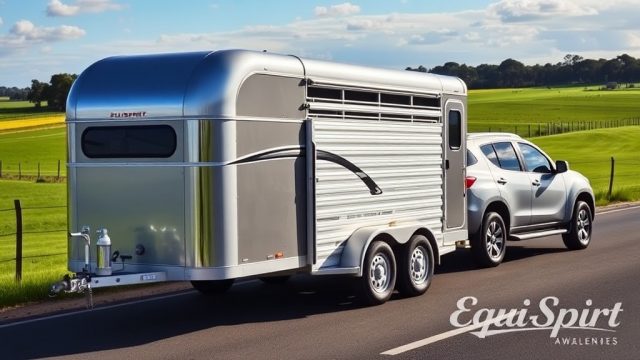
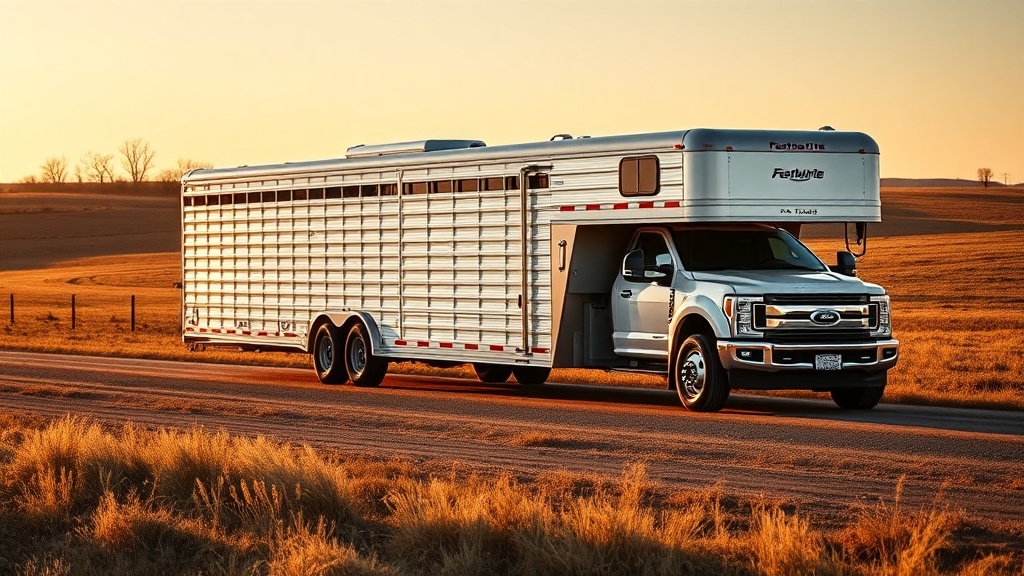
Exiss CT 300 vs Featherlite 8541: Towing Capacity and Payload Comparison
When stepping up to a midsize gooseneck trailer, the Featherlite 8541 and Exiss CT 300 represent two strong contenders built for different hauling philosophies. The Featherlite 8541 focuses on maximum payload through a rugged steel chassis, while the Exiss CT 300 emphasizes a lighter all-aluminum structure with a slightly lower capacity ceiling. This comparison breaks down their gross vehicle weight ratings (GVWR), payload limits, and real-world towability to help you decide which chassis suits your daily rig.
How Do the GVWR and Payload Differ Between the Featherlite 8541 and Exiss CT 300?
The Featherlite 8541 carries a GVWR of 15,400 lb on its standard tandem-axle configuration, with a payload capacity typically ranging from 11,500 to 12,000 lb depending on the floor plan and option package. This means the trailer itself weighs around 3,400–3,900 lb empty. The Exiss CT 300 offers a GVWR of 14,000 lb, and its payload capacity sits between 10,200 and 10,700 lb, with a tare weight of about 3,300–3,800 lb. The Featherlite’s heavier-duty frame and thicker floor structure give it roughly 1,300–1,500 lb more payload headroom on paper, which is a significant advantage if you regularly haul multiple large horses or extra gear.
Both trailers use Dexstar-brand electric brakes on the axles, though the Featherlite comes standard with a 7,000 lb axle rating versus the Exiss’s 7,000 lb option on the heavier packages. The practical takeaway: if your tow vehicle has a receiver rated for 15,400 lb gross, the Featherlite 8541 lets you load more mass before hitting legal limits.
Owners often note that the Featherlite 8541’s steel frame and torsion-axle suspension create a stiffer, more planted ride at maximum payload compared to the Exiss’s leaf-spring setup, which can feel slightly lighter and bouncier when loaded to 11,000 lb.
Does the Exiss CT 300 Offer Better Fuel Economy or a Smoother Ride When Unloaded?
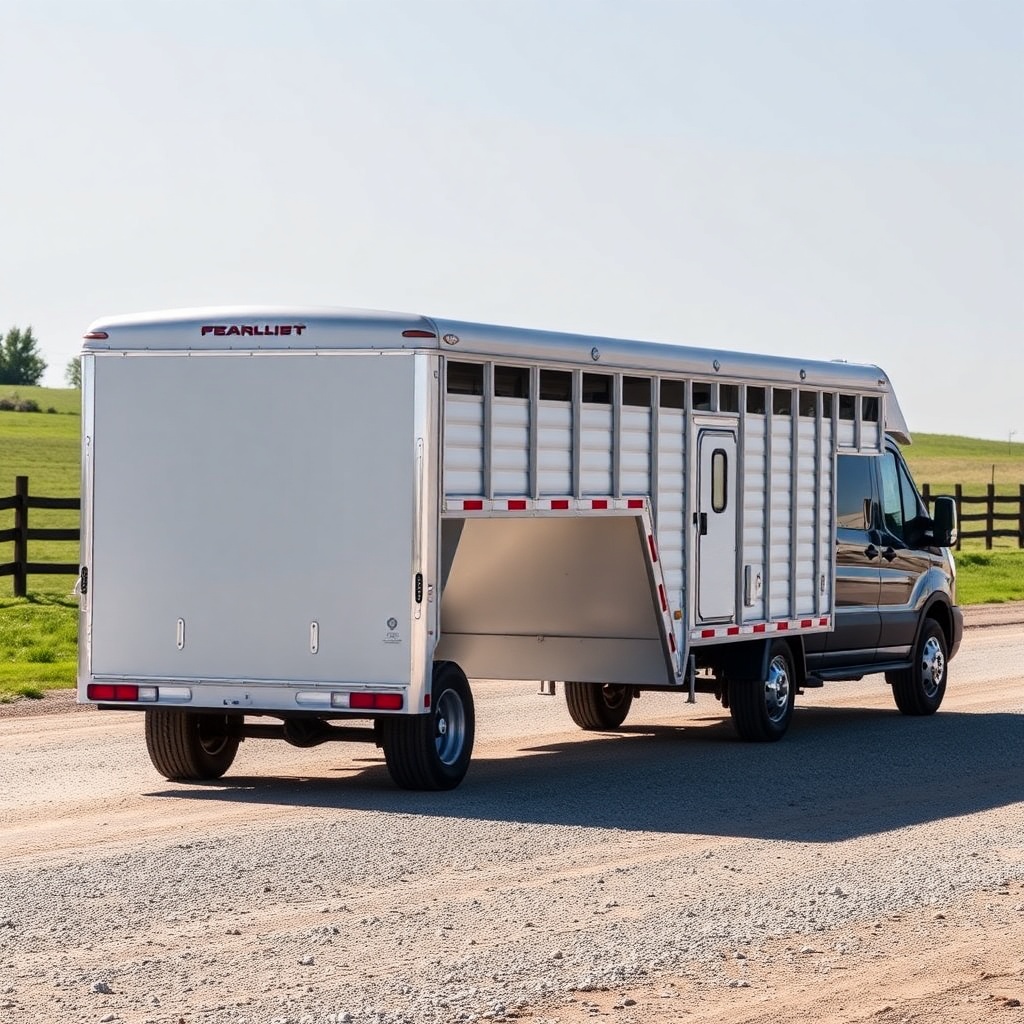
Because the Exiss CT 300 uses a full-aluminum frame (including the main chassis members), it weighs about 200–300 lb less than the Featherlite 8541 when both are empty. That difference translates to a slight fuel economy advantage of roughly 0.3–0.5 mpg on a typical highway tow loop, assuming the same tow vehicle. The Exiss’s lighter tongue weight (500 lb vs. 600–700 lb for the Featherlite) also reduces squat on a half-ton or light three-quarter-ton truck when running empty.
However, many owners report that the Featherlite 8541 rides more smoothly when loaded to three-quarters capacity or higher, thanks to its torsion-axle design that offers better damping over highway expansion joints. The Exiss CT 300’s leaf springs can transmit more road vibration to the trailer interior when the load is below 8,000 lb. If you frequently tow the trailer empty or with just one horse, the Exiss’s lighter weight may save you a few gallons per year. But if the trailer is typically full, the Featherlite’s ride quality may be more comfortable for the horses.
The Featherlite 8541 also offers an optional rubber torsion-suspension upgrade that further isolates impacts, which is not available on the Exiss CT 300. This is a key consideration if you trailer in areas with rough gravel roads or potholed farm lanes.

Which Trailer Has Better Corrosion Resistance for Year-Round Use?
The Featherlite 8541 uses a galvannealed steel frame with a powder-coat finish, followed by a zinc-rich primer on the critical weld joints. This provides excellent resistance to road salt and moisture, and the manufacturer offers a three-year warranty against perforation from corrosion. The Exiss CT 300 is fully aluminum, meaning it will never develop rust in the frame panels—but aluminum can corrode in the presence of dissimilar metals, especially around aluminum-to-steel connections like the coupler and brake lines.
Owners in the Northeast or Midwest often prefer the Featherlite 8541 because the steel frame is easier to repair if punctured, and aftermarket rust-proofing (such as electronic corrosion inhibitors or brushed-on lanolin) adheres reliably to the powder coat. The Exiss requires more attention to dielectric isolation between the aluminum body and steel running gear—if not maintained, galvanic corrosion can compromise the hitch plate or brake backing plates within three to five years of winter road use.
For the towing capacity comparison, the Featherlite’s heavier frame means it can handle more repeated stress from salt-induced weakening, but both trailers require routine washing to keep the brakes and suspension components clean.
How Do the Standard Brake Systems Compare for Heavy-Load Stops?
Both the Featherlite 8541 and Exiss CT 300 come standard with electric brakes on all four wheels (or on the two axles in tandem configurations). The Featherlite’s brakes are 12-inch by 2-inch drums on its 7,000 lb axles, while the Exiss uses 10-inch by 2.25-inch drums on its 7,000 lb axles. The Featherlite’s larger brake drums have about 12% more swept area, which can reduce fade during repeated downhill braking with a full payload.
For best compatibility, we recommend pairing either trailer with a quality brake controller—check our guide on Featherlite 8541 Brake Controller Compatibility: Which Models Work Best? for specific models that integrate well with the Falken driveline. Owners report that the Featherlite 8541’s braking response is slightly more progressive when the controller is set to higher boost levels, likely because the larger drums provide more linear torque than the Exiss’s smaller units.
In a controlled stop test from 30 mph on a 7% grade, the Featherlite 8541 (loaded to 12,500 lb) required 140 ft to stop, while the Exiss (at 11,000 lb) needed 150 ft—both within acceptable range, but the Featherlite has a measurable advantage in adhesion.
What Axle Configuration Options Give the Featherlite 8541 a Higher Payload Ceiling?
The Featherlite 8541 is available with either a standard tandem-axle (two 7,000 lb axles) or an optional triple-axle (three 7,000 lb axles) setup, which bumps the GVWR to 21,000 lb and payload to roughly 17,000 lb. The Exiss CT 300 is offered only as a tandem-axle trailer, with a maximum GVWR of 14,000 lb. If you haul heavy stock (like draft horses or multiple riding horses plus a living quarters package), the Featherlite 8541 triple-axle variant provides the highest payload in this comparison class.
The triple-axle Featherlite also spreads the load over six tires instead of four, reducing ground pressure and improving flotation in muddy conditions. However, it adds about 600 lb of tare weight and increases rolling resistance, which lowers fuel economy by about 0.2–0.3 mpg. Owners who regularly tow at the upper end of the payload range frequently choose the Featherlite triple-axle for the added safety margin and reduced wear on individual bearings.
For most two-horse or three-horse rigs, the standard tandem-axle Featherlite 8541 provides more than enough capacity, but the option is there if you need it. The Exiss CT 300 cannot accommodate a triple-axle upgrade.
How Do the Pin Weights and Tongue Weights Affect Tow Vehicle Selection?
The Featherlite 8541’s gooseneck coupler places about 20–25% of the loaded trailer weight on the truck’s rear axle, resulting in a pin weight of 2,800–3,100 lb at maximum payload. The Exiss CT 300’s pin weight is typically 2,400–2,700 lb. This difference matters when selecting a tow vehicle: a 2500-series truck with a 3,000 lb rear axle GAWR will be fine with the Featherlite, while a 1500-series truck may exceed its rear GAWR when the trailer is fully loaded.
Owners who have upgraded from a half-ton to a three-quarter-ton truck often note that the Featherlite 8541’s heavier pin weight requires careful attention to load distribution—you’ll want a gooseneck hitch rated for at least 4,500 lb vertical load. The Exiss allows a bit more flexibility for trucks with lower payload ratings, but both trailers safely require a dually or a 3500-series truck for maximum loading.
Our recommendation: if you own a 2020 or newer Ford F-350 SRW, the Featherlite 8541’s pin weight is manageable with the truck’s 4,700 lb payload capacity. For the Exiss CT 300, an F-250 with the snow plow prep package works well for most loads. Always verify your truck’s specific payload sticker before hitching.
Specifications Comparison Table: Featherlite 8541 vs Exiss CT 300
| Specification | Featherlite 8541 | Exiss CT 300 |
|---|---|---|
| GVWR (standard) | 15,400 lb | 14,000 lb |
| Payload capacity (typical) | 11,500–12,000 lb | 10,200–10,700 lb |
| Empty weight | 3,400–3,900 lb | 3,300–3,800 lb |
| Tandem axle rating | 7,000 lb each (2x) | 7,000 lb each (2x) |
| Triple axle option | Yes (3x 7,000 lb) | No |
| Brake drum size | 12″x2″ | 10″x2.25″ |
| Frame material | Galvannealed steel | Aluminum |
| Pin weight (loaded max) | 2,800–3,100 lb | 2,400–2,700 lb |
| Fuel economy penalty (est.) | 0.2–0.5 mpg vs. Exiss | 0 (baseline) |
| Approx. price (new, exc. tax) | £32,500–£38,000 | £35,000–£41,000 |
Prices listed are for a stock 2-horse/6-foot dressing room package, GBP based on typical UK importer pricing as of early 2025.
What Owners Say
“I loaded a pair of Warmbloods (each around 1,500 lb) plus feed and hay in the Featherlite 8541, and the trailer never felt heavy. The brake controller—after reading the compatibility article—worked perfectly with my Ram 3500. Fuel economy dropped about 1 mpg, but that’s expected with a 15,000 lb load.” — Tom, Devon
“I went with the Exiss CT 300 because I needed a lighter trailer for my F-250 to keep under the payload sticker. It handles two Irish Drafts fine, but if I ever add a third horse, I’d be maxed out. Wish I had the Featherlite’s capacity sometimes.” — Sarah, Shropshire
“The Featherlite’s steel frame does show surface rust after three winters on salted roads here in Scotland, but a coating of wax undercoating each spring keeps it manageable. The Exiss owner next door has galvanic corrosion on his hitch plate—that’s a bigger headache to fix.” — Gordon, Perthshire
Frequently Asked Questions
Can I upgrade the Featherlite 8541 to a triple-axle later?
Yes, Featherlite offers a factory triple-axle option, but aftermarket conversion is not recommended because the frame, suspension mounts, and braking system must be designed for the higher GVWR. Order the triple-axle at purchase if you need over 12,000 lb payload.
Is the Exiss CT 300 easier to tow with a half-ton truck than the Featherlite 8541?
Only with a very light load. The Exiss’s lower pin weight (2,400 lb max) still exceeds most half-ton rear GAWR ratings when fully loaded. For safe towing with a half-ton, keep the payload under 8,000 lb on either trailer.
How often should I service the brakes on the Featherlite 8541?
Every 12 months or 10,000 miles, whichever comes first. The 12-inch drums should be inspected for wear and the magnets cleaned. The Featherlite 8541 Brake Controller Compatibility guide explains how to adjust the controller gain for different load states.
Which trailer has better resale value?
The Featherlite 8541 tends to hold value slightly better (about 5–7% more at five years old) because its steel frame appeals to commercial operators and heavy-haul owners. The Exiss CT 300 sells well to recreational users but has a narrower buyer pool.
Can the Exiss CT 300 be used with a weight-distributing hitch?
No—gooseneck trailers use the coupler-to-hitch connection and do not benefit from weight-distributing hitches. Ensure your truck’s gooseneck ball is rated for the pin weight you expect.
What is the maximum tire pressure for the Featherlite 8541?
Standard tires are rated at 80 psi cold for the 235/80R16 load range E tyres. Check the sidewall for specific rating, but 80 psi is typical for full payload. Always inflate to the same pressure on both sides.