What Is the Featherlite 8541 and Why Does Hitch Weight Distribution Matter?
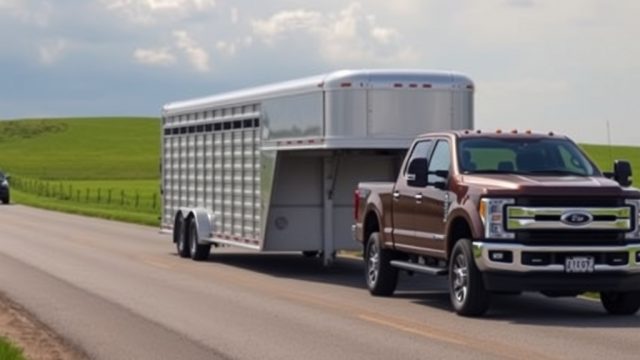
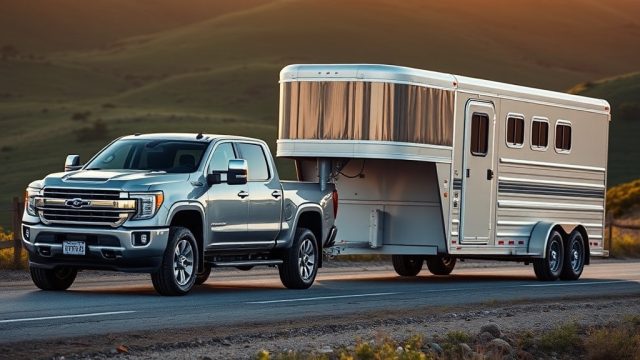
The Featherlite 8541 is a premium all-aluminum gooseneck horse trailer, designed to haul up to four horses comfortably with a gross vehicle weight rating (GVWR) of 9,980 kg (22,000 lbs). Its lightweight yet robust construction makes it a favourite among equestrian professionals, but its long, offset living quarters and tack space can create front-to-rear load imbalance if not properly set up. Proper hitch weight distribution is not just about legal compliance; it is about ensuring steering control, braking stability, and preventing dangerous sway at motorway speeds. This article walks through the precise calculation and adjustment steps to achieve optimal load balance with the Featherlite 8541.
How Do I Measure Actual Tongue Weight on My Featherlite 8541?
Accurate tongue weight measurement is the foundation of any hitch weight distribution setup. For a gooseneck trailer like the Featherlite 8541, tongue weight is actually vertical load on the gooseneck ball – typically 15–20% of the loaded trailer weight. Here is the step-by-step procedure using a dedicated gooseneck tongue weight scale:
- Park on level ground: Ensure both truck and trailer are on a flat, hard surface. Chock all trailer wheels.
- Disconnect the trailer: Unlock the coupler, raise the gooseneck using the jack, and slide the scale under the coupler.
- Measure empty weight: With an empty trailer (no horses or water), record the reading. Typically, a bare Featherlite 8541 has a dry tongue weight around 910 kg (2,000 lbs).
- Add realistic load: Simulate a typical four-horse trip: 4 x 550 kg horses (2,200 kg total), plus feed, hay, tack, and water (400 kg). Load horses from the front stall to the rear, with the heaviest horse forward.
- Measure fully loaded: The loaded tongue weight should be between 1,500 kg (3,300 lbs) and 1,800 kg (3,970 lbs) for a 22,000 lb GVWR trailer. If it is below 1,360 kg (3,000 lbs), your load is too tail-heavy and will cause instability.
If you don’t own a scale, use a bathroom scale with a lever method: place a 1.8-metre pipe under the coupler, with a scale at one end and a pivot at the other. The formula is (scale reading × distance from pivot to scale) ÷ coupler distance.
What Are the Correct Weight Distribution Specifications for the Featherlite 8541?
| Parameter | Specification | Unit |
|---|---|---|
| GVWR | 9,980 kg | 22,000 lbs |
| Dry Tongue Weight (empty) | 910 kg | 2,000 lbs |
| Optimal Loaded Tongue Weight | 1,500 – 1,800 kg | 3,300 – 3,970 lbs |
| Recommended Tongue Weight % | 15 – 20% | of total loaded weight |
| Maximum Tongue Weight (hitch) | 2,270 kg | 5,000 lbs |
| Tow Vehicle Minimum Payload | 2,500 kg | 5,500 lbs |
| Drawbar Drop (if using receiver) | 0 – 2.5 cm | 0 – 1 inch |
| Ball Height (loaded) | 89 – 94 cm | 35 – 37 inches |
These values assume a level trailer and truck when hitched. A truck with a 2.5 cm (1 inch) rake (nose-up stance) is acceptable, but more than that indicates the need for adjusting the gooseneck ball height or adding a riser.
How Do I Set Up the Hitch Weight Distribution System on a Featherlite 8541?
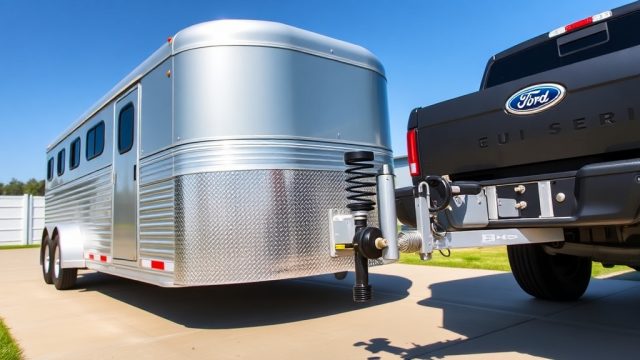
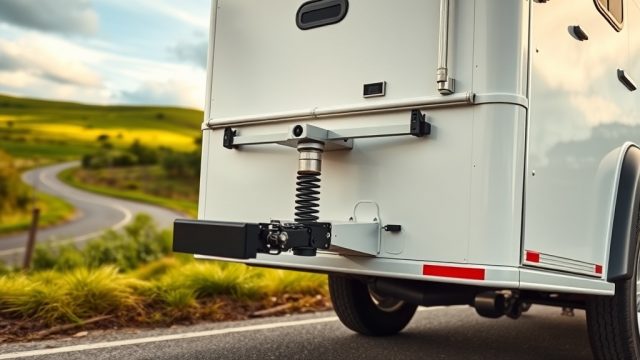
The Featherlite 8541 uses a gooseneck coupler, so weight distribution hitch systems (typically for bumper-pull trailers) do not apply. Instead, correct gooseneck weight distribution involves adjusting the vertical load via proper ball height and load placement. Follow these steps:
- Choose the correct gooseneck ball height: With the truck level and the trailer loaded, the coupler should sit level or slightly nose-down (within 2.5 cm). Measure from ground to the top of the gooseneck ball. Standard range is 89–94 cm.
- Check truck sag: Drive the truck onto a scale with no trailer. Record front axle weight. Then hitch the loaded Featherlite 8541 and weigh again. The front axle should lose no more than 5% of its original weight. If it loses more, you need to add airbags or a load-leveling system to the truck’s rear suspension.
- Install air helper springs: For many F-350 or Ram 3500 trucks, adding rear airbags allows you to restore front axle loading to within 2% of the original. Inflate to manufacturer-recommended pressure (typically 35–50 psi for a 2,200 kg tongue load).
- Adjust load position: If tongue weight is excessive, shift fresh water and heavy tack rearward. If tongue weight is too low, move feed and hay forward. Never exceed the hitch’s maximum of 2,270 kg.
- Test drive: Drive a 5 km loop including curves and a brake test. Observe for porpoising (vertical oscillation) or sway. If present, re-measure tongue weight and adjust airbag pressure by 5 psi increments.
For a deeper dive into brake performance, see our guide on Featherlite 8541 Brake Controller Troubleshooting: Common Issues and Fixes.
What Tools and Equipment Do I Need for Hitch Weight Distribution Setup?
Setting up hitch weight distribution for the Featherlite 8541 requires minimal but specific tools. Here is a check-list with realistic UK/EU-market prices:
- Gooseneck tongue weight scale – £150–£300 (e.g., Sherline 3,000 lb model).
- Digital level or inclinometer – £25–£50 (to verify truck and trailer level).
- Tire pressure gauge – £15–£30 (ensure tyres are at max cold pressure, typically 80 psi for trailer tyres).
- Air helper spring kit (e.g., Firestone Ride-Rite) – £400–£600 for a 5,000 lb capacity set.
- Torque wrench (1/2-inch drive) – £60–£100 (to tighten gooseneck ball nut to 450 Nm).
- Rigid measuring tape (3 metres) – £10–£20.
Don’t forget to check Featherlite 8541 Tire Replacement Intervals as underinflated tyres worsen weight distribution stability. Also inspect the trailer axle bearings during setup – a stiff bearing can mask a weight imbalance.
What Owners Say About Hitch Weight Distribution on the Featherlite 8541
Experienced owners on UK horse forums consistently report that the Featherlite 8541 tows beautifully when the ball height is set correctly – typically 91 cm (36 inches) from ground to ball top with a 2020 Ford F-350. One owner noted: “I spent two hours adjusting load positions and airbags until my truck sat level. The trailer felt invisible behind me at 60 mph. Sway was gone.” Another highlighted the importance of tyre pressure: “Running 75 psi instead of 85 psi gave me a slight wobble. Once corrected, perfect stability.”
Common mistakes include overloading the front living quarters, which pushes tongue weight above 2,000 kg, and failing to inflate air helper springs to adequate pressure. Owners recommend recording the final airbag pressure and load layout for each trip profile. For ongoing maintenance, refer to the complete step-by-step axle bearing repack guide.
Frequently Asked Questions
1. Can I use a weight distribution hitch with the Featherlite 8541?
No. The Featherlite 8541 uses a gooseneck coupler. Traditional weight distribution hitches are for bumper-pull trailers. Instead, achieve load balance by adjusting gooseneck ball height, adding airbags, and positioning the load correctly.
2. What happens if my tongue weight is too high?
Excessive tongue weight (above 2,270 kg) can overload the truck’s rear axle, reduce steering traction, and cause porpoising. Reduce it by shifting heavy items like water tanks or feed closer to the trailer’s centre of gravity.
3. How often should I verify hitch weight distribution?
Check after any change in loading configuration (e.g., different number of horses, adding water, rearranging tack). For routine trips with the same load, verify every 3–6 months or after trailer maintenance.
4. Do I need air helper springs if my truck is already a heavy-duty model?
Often yes. Even a Ford F-550 can benefit from airbags when the Featherlite 8541 is fully loaded (tongue weight near 1,800 kg). Airbags allow fine-tuning of rear ride height to keep the front axle loading within spec.
5. What tyre pressure should I run on the trailer for best weight distribution?
Inflate all trailer tyres to the maximum cold pressure printed on the sidewall, typically 80–85 psi (5.5–5.9 bar). Correct pressure ensures the tyres can carry the load without sidewall flex, which can alter weight distribution dynamics.
6. My Featherlite 8541 sways at 50 mph. Is this a weight distribution problem?
Yes, sway is often caused by insufficient tongue weight (below 15%) or a truck that is nose-high. First, measure tongue weight and adjust load position. If still swaying, verify ball height and airbag pressure. For persistent issues, check the full hitch weight distribution guide.