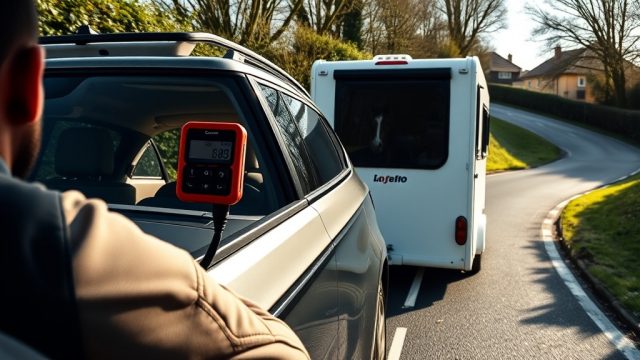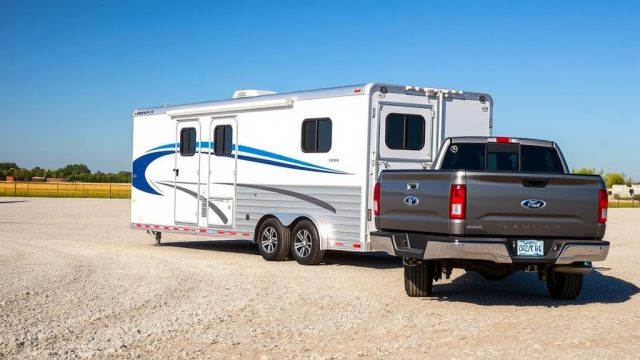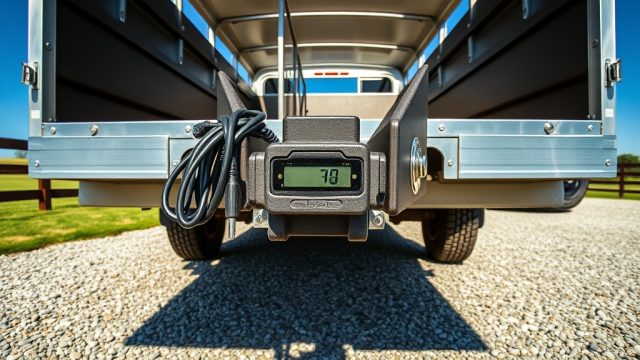
Introduction: Why Calibrating the Featherlite 8541 Electric Brake Controller Matters
Horse owners often discover that the Featherlite 8541 horse trailer’s electric brakes need fine-tuning for safe, smooth stops. A poorly calibrated controller causes jerking, excessive sway, or premature brake wear, especially when hauling horses that can be unsettled by sudden deceleration. This guide provides a step-by-step calibration process—tailored to the Featherlite 8541’s 7,000-lb to 8,000-lb gross vehicle weight rating (GVWR) and typical 6,000-lb to 6,500-lb loaded weight—so you can achieve balanced stopping power regardless of load or road condition.
What Are the Standard Brake Controller Settings for the Featherlite 8541?
Most electric brake controllers offer two main adjustments: gain (or power level) and sync (or inertia response). The Featherlite 8541 uses four 12-inch electric brakes with self-adjusting magnet shoes. A good starting point is:
| Brake Controller Parameter | Featherlite 8541 Recommended Starting Value | Notes |
|---|---|---|
| Gain (power to brakes) | 5.0 – 6.0 on a 10-scale | Lower for empty/light loads; higher for near-GVWR |
| Sync/inertia (delay) | 4 or medium-firm (3–5 setting) | Prevents nose dive while allowing smooth deceleration |
| Boost (if available) | Off or low | Not needed unless towing in steep terrain with frequent stops |
These are baseline figures. Always perform a manual calibration test on a safe, level stretch of road before every trip.
How Do I Perform a Manual Gain Calibration on the Featherlite 8541?
Manual gain calibration confirms that your brake controller is delivering enough, but not too much, current to the Featherlite 8541’s magnets. Follow these steps:
- Step 1: Connect the trailer to your tow vehicle and verify all lights and breakaway switch function. Check that the battery in the Featherlite 8541’s breakaway system is fully charged (typically 12.2V to 12.6V).
- Step 2: Drive to a dry, level, low-traffic area. Accelerate to 25 mph (about 40 km/h).
- Step 3: Manually slide or press the controller’s gain slider/button to about halfway (5.0 on a 10-scale). Then fully apply the manual override lever (usually on the controller).
- Step 4: Observe the trailer’s braking response. A properly set gain will bring the Featherlite 8541 to a stop in a straight line without locking any wheels. If the trailer brakes lock up, reduce gain by 0.5. If the trailer pushes through the truck’s brakes (no noticeable deceleration), increase gain by 0.5.
- Step 5: Repeat at 25 mph until you find a gain setting where the truck and trailer stop as one unit. Write down this number for future reference.
Key safety note: Over-gaining burns brake magnets and drums. Under-gaining leads to long stopping distances. For the Featherlite 8541 with fresh linings, a gain of 5.5 is common at 65% GVWR.
How Do I Set the Sync/Inertia for Smooth Horse Hauling?
The sync or inertia setting controls how quickly brake power ramps up after you apply the truck’s brakes. A harsh sync jerks horses forward, risking injury or panic. A too-soft sync makes the Featherlite 8541 feel disconnected.
- Start with medium: Set the sync to 4 (on a 1-10 scale). Drive at 30 mph (48 km/h) and gently brake to a complete stop. The trailer should “follow” the truck without a noticeable lurch.
- Tweak for load: Heavier loads (near 6,500 lb) benefit from a firmer sync (6–7) to prevent excessive brake lag. Light loads (under 5,000 lb) do better with a softer sync (2–3).
- Dry-run test: On a slight downhill grade (3–5%), maintain 25 mph and brake moderately. If the Featherlite 8541 sways side-to-side or the truck feels pushed, soften the sync. If the trailer brakes feel grabby, firm it up slightly.
A well-calibrated sync reduces stress on your horses, towing gear, and trailer structure. For best results, always recalibrate sync after any significant load change on the Featherlite 8541.
What Role Does Weight Distribution Play in Brake Controller Calibration?
The Featherlite 8541’s electric brakes perform best when the trailer sits level. Improperly distributed weight (too much nose weight or too little tongue load) alters the trailer’s brake bias. An out-of-level trailer can cause rear-axle brake lockup or forward-axle under-braking.
If you haven’t already set up a weight distribution system, refer to the HorseTowPro Hitch Weight Distribution Setup for Featherlite 8541: Achieving Optimal Load Balance. This article explains how to achieve a tongue weight between 10% and 15% of total loaded weight—a critical range for featherlite 8541s.
After adjusting weight distribution, you must redo the gain and sync calibration from scratch. Load balance changes the trailer’s inertia response. Always document your final gain and sync numbers for the most common horse load (e.g., two horses plus tack, roughly 2,500 lb).
Frequent Troubleshooting: Brake Controllers on the Featherlite 8541
• Problem: Brake controller shows “no trailer” or “open circuit.” Check the 7-pin connector at the truck. Poor contact at pin 2 (electric brake control) is common. Re-pin if needed.
• Problem: Intermittent brake operation. Inspect the Featherlite 8541’s brake magnet wires at each wheel hub for chafing or corrosion. HorseTowPro Trailer Axle Bearing Repack Guide for Featherlite 8541: Step-by-Step for Longevity includes cleaning and sealing magnet wire ends as part of routine maintenance.
• Problem: Brakes feel sluggish in wet conditions. The Featherlite 8541’s electric brakes require a slightly higher gain (add 1–1.5) on wet pavement because wet friction reduces magnet-to-drum bite.
• Problem: Brake warning light on dash of tow vehicle. Likely an imbalance between truck and trailer brake output. Reduce gain by 1–1.5 and recheck.
• Problem: One wheel locks up. That wheel’s magnet or wiring may be failing. Repack bearings and inspect the magnet’s air gap (should be 0.010–0.030 in.).
What Owners Say About Brake Controller Calibration on the Featherlite 8541
Experienced Featherlite 8541 owners report that a gain between 5.5 and 6.5 works reliably for towing two full-sized quarter horses (approx. 3,400 lb total horse weight plus 600 lb of tack). Many use a Prodigy P3 or Curt Spectrum controller. Their top tip: “Always do a full manual brake test after any brake service or tire change. A 30-minute calibration saves you from a dangerous sway event.”
Another common observation: the Featherlite 8541’s self-adjusting brakes require an initial “burn-in” period of about 200 miles (320 km) before the magnets seat properly. During this period, the controller gain may need 0.5 to 1 point more. After break-in, dial it back down.
For tire-related aspects that affect braking, see Featherlite 8541 Tire Replacement Intervals: When and How to Replace. Worn tires reduce braking traction and can skew calibration feedback.
Frequently Asked Questions
1. Can I use a time-delayed brake controller with the Featherlite 8541?
Yes, but inertial controllers (like Tekonsha Prodigy) are preferred because they adjust automatically to load changes. Time-delayed controllers require manual adjustment every time the load changes, which is inconvenient for horse owners.
2. Should I calibrate gain when the trailer is empty or loaded for horses?
Always calibrate with the typical horse load that you will tow most often. Calibrating empty can lead to over-braking when horses are onboard, increasing risk of sliding. If you tow varied loads, consider a controller with a memory (like the Curt Echo) that stores multiple profiles.
3. What mileage should I inspect the Featherlite 8541’s brake magnets?
Inspect every 5,000 miles (8,000 km) or at the start of each towing season, whichever comes first. During the HorseTowPro Axle Bearing Repack Guide for Featherlite 8541, you’ll see the magnets and measure their wear (minimum thickness 3/16 in./4.8 mm).
4. My Featherlite 8541’s controller gains fluctuate on long downhill sections. Why?
Electric brakes can heat up on extended descents; heat reduces magnetic efficiency. This is normal but can be mitigated by manually downshifting the tow vehicle to use engine braking. If gain drops significantly, reduce speed.
5. Is the breakaway switch calibration part of this guide?
No—the breakaway switch is a separate safety device. Ensure its battery is fresh (replace every 2 years) and test the switch monthly. A working breakaway switch applies full brakes if the trailer disconnects, regardless of controller settings.
6. Should I replace the 7-pin connector if I have intermittent brake issues?
Yes, if you’ve cleaned all contacts and inspected wires without success. A corroded 7-pin is a common culprit. Replace it with a high-quality sealed model to prevent moisture ingress. After replacement, recalibrate from gain zero.
Final Verification: Your Calibration Checklist
Before every trip with the Featherlite 8541, run through this quick list:
– Check controller gain (write your number from calibration on a sticker inside the trailer’s tack door for quick reference).
– Verify breakaway battery charge.
– Confirm that all four magnet connectors are clean and tight.
– Perform a low-speed manual brake test at 15 mph (24 km/h).
– For long hauls, pre-plan your brake controller sync adjustments for any steep grades anticipated.
Proper calibration of your electric brake controller transforms the Featherlite 8541 from an ordinary trailer into a responsive, horse-safe towing partner. For ongoing maintenance that supports reliable brakes, bookmark the HorseTowPro Hitch Weight Distribution Setup for Featherlite 8541: Achieving Optimal Load Balance and the HorseTowPro Trailer Axle Bearing Repack Guide for Featherlite 8541.