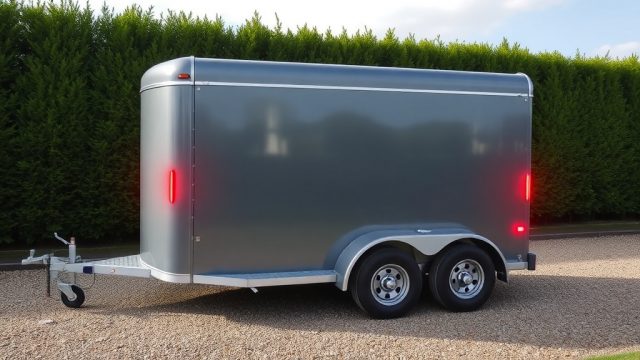
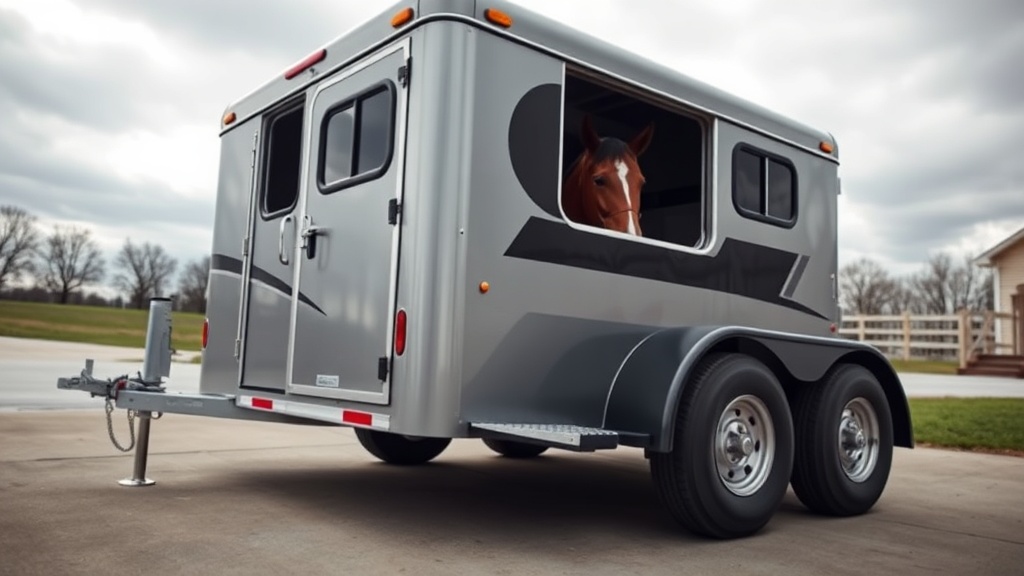
Why Does My Equi-Spirit 2 Horse Bumper Pull Need Regular Axle Bearing Repacking?
If you own an Equi-Spirit 2 Horse Bumper Pull, you already rely on it for safe, smooth hauls. But like any well-used trailer, the axle bearings endure constant heat, moisture, and road grit. Without periodic repacking, grease degrades, bearings seize, and you risk a catastrophic wheel-off event at highway speed. This guide covers the complete hub disassembly, cleaning, inspection, and repack procedure tailored for the Equi-Spirit’s 3,500-lb or 5,200-lb Dexter® axles—so you can extend service life and avoid roadside repairs.
Proper bearing maintenance also supports other critical systems. For instance, well-lubricated bearings reduce rolling resistance, which improves hitch weight distribution stability. And with fresh grease, your brake magnets and wiring stay cooler, aligning with brake controller compatibility recommendations.
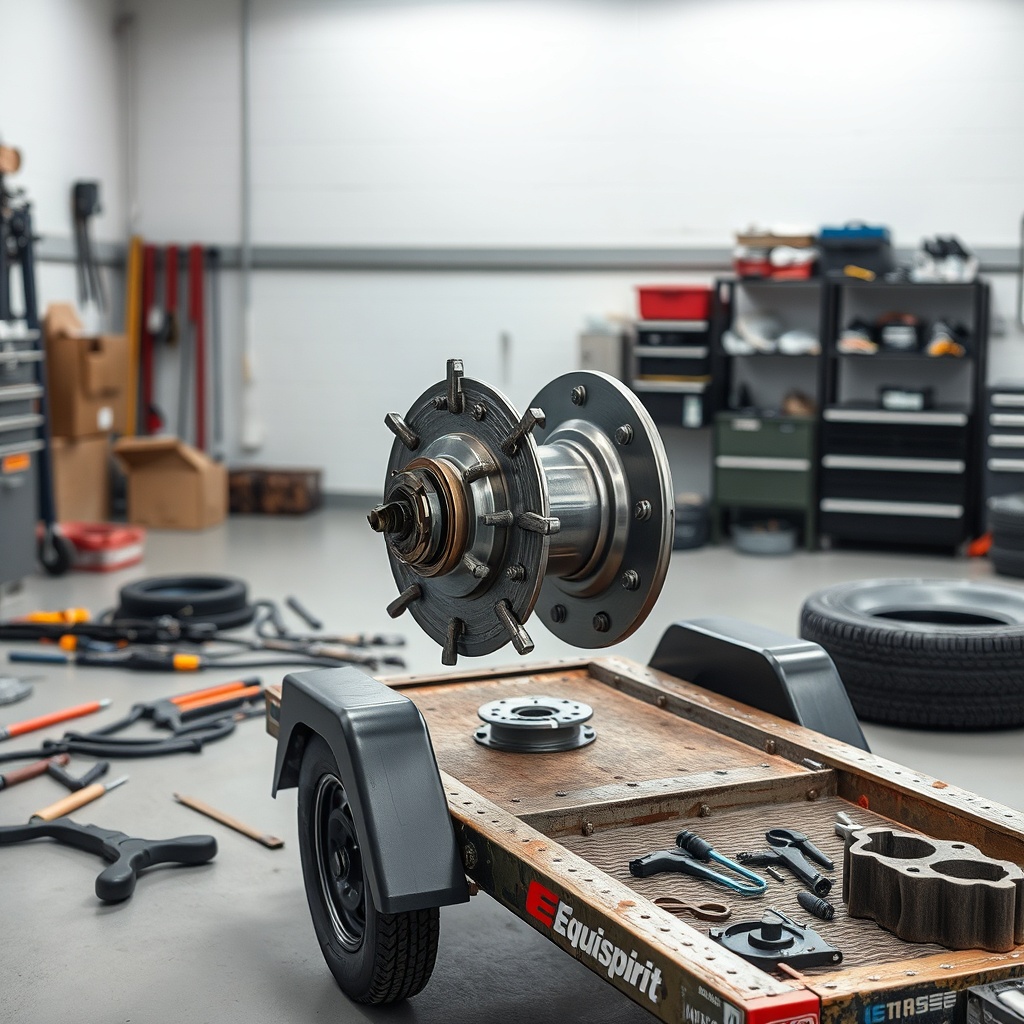
How Often Should I Repack the Bearings on My Equi-Spirit 2 Horse Bumper Pull?
Frequency depends on usage, but the general rule for this trailer model is every 12 months or 12,000 miles—whichever comes first. However, if you live in a humid coastal area or frequently tow through rain, mud, or salty roads, reduce that interval to 6 months or 6,000 miles. Heed warning signs: any grinding noise from the wheels, excessive hub heat after a 30-mile tow, or visible grease leakage past the dust cap means repack immediately.
- Light use (monthly weekend trips): every 12 months.
- Heavy use (weekly competition or training hauls): every 6 months.
- Storage prep: after any prolonged wet storage, combine with winter storage tips to prevent corrosion from sitting damp.
Stick to a logbook entry for each bearing service; record mileage, date, and grease brand (e.g., Lucas Red ‘N’ Tacky #2 or Mobilgrease XHP 222).
What Tools and Grease Do I Need for an Equi-Spirit Bearing Repack?
For this job, you’ll need a basic socket set (1/2-inch drive), a brass drift punch, a torque wrench (0–150 ft-lb), a clean catch pan, disposable gloves, shop rags, and a tub of premium lithium-complex NLGI #2 grease rated for trailer bearings (never use automotive multi-purpose grease). Also, have a new grease seal per hub (part number DEXTER 10-45 or equivalent) and a replacement cotter pin. The Equi-Spirit typically uses 1–1/2 inch or 1–3/4 inch inner bearing cones (depending on axle capacity); confirm your axle ID plate before purchasing seals.
Special note: If your trailer uses the optional E-Z Lube® system (common on 2020+ models), you can add grease through the axle spindle zerk without disassembly—but a full repack still requires removal every second service. A bearing packer tool saves time, though hand-packing works fine. For peace of mind, verify tire condition at the same time, since worn tires can mask bearing vibration.
Step-by-Step: How to Repack Axle Bearings on an Equi-Spirit 2 Horse Bumper Pull
Step 1: Safety and Prepping
Park the trailer on a level surface, chock both wheels of the opposite side, and jack up the side you’re working on under the axle spring pad (not the frame). Remove the wheel and tire. Clean the hub face with brake cleaner to prevent dirt entering during disassembly.
Step 2: Remove the Hub and Bearings
Pry off the dust cap using a flat-blade screwdriver. Remove the cotter pin and castle nut. Slide the washer and outer bearing cone off the spindle. Now carefully pull the hub assembly straight off—the inner bearing and seal will come with it. Place the hub on a clean surface, keeping the bearing cones in order (inner vs outer).
Step 3: Clean and Inspect All Parts
Wipe all old grease from the hub cavity, spindle, and bearing cones using a solvent bath or brake cleaner. Let them air dry. Inspect each bearing roller for pitting, spalling, bluish discoloration (overheating), or cracks. Spin the cone on the cup; if it feels rough or catches, replace both the cone and cup (race) as a matched set. Also check the spindle surface for scoring—any groove deeper than 0.005 inch means spindle replacement or sleeving.
| Inspection Point | Acceptable Condition | Replace If: |
|---|---|---|
| Bearing rollers | Smooth, shiny, no pitting | Any pitting, flaking, or blue/black discoloration |
| Race (cup) surface | Polished, no grooves | Visible wear groove, cracks, or galling |
| Spindle surface | Smooth, no burrs | Grooves >0.005 inch or rust damage |
| Grease seal | Flexible, no tears | Hard, cracked, or missing lip |
| Dust cap | No dents | Dented or cracked—can leak water |
Step 4: Pack the Bearings
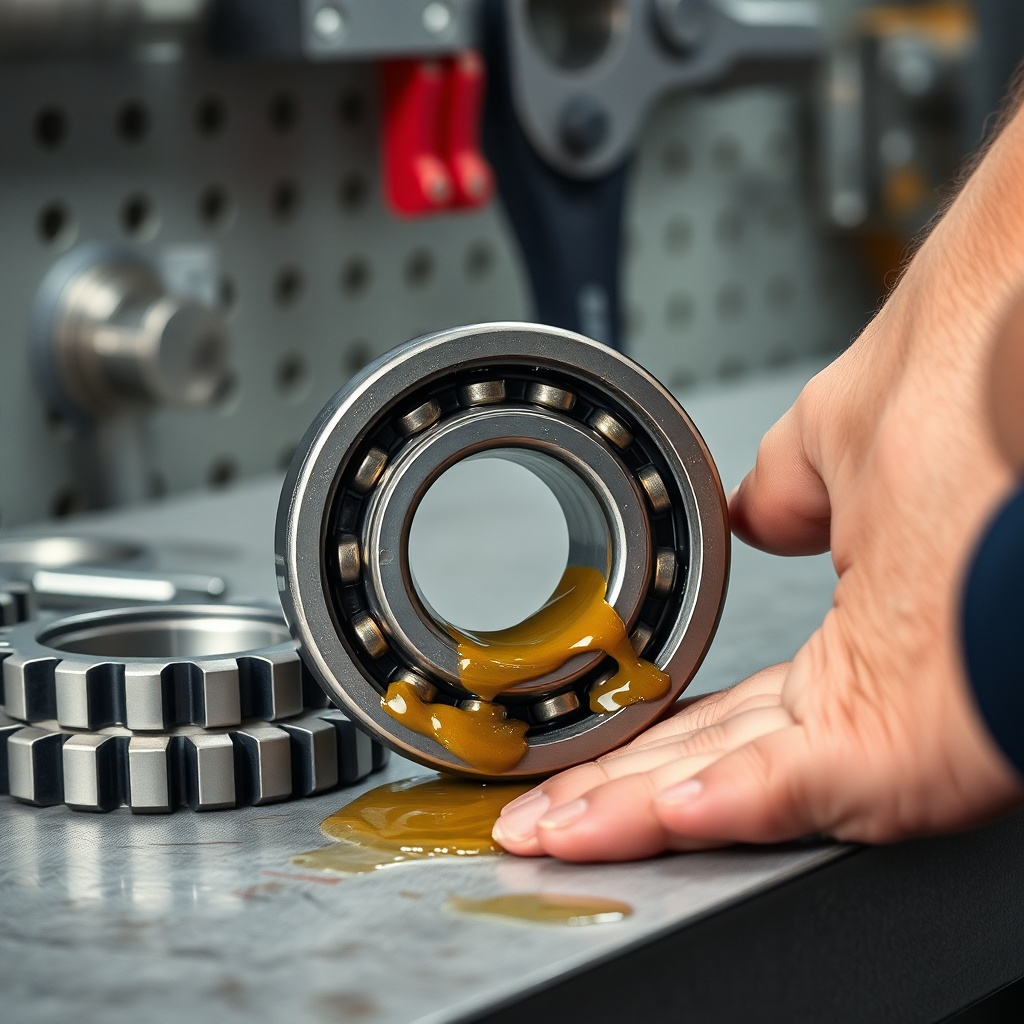
Apply a generous dollop of fresh grease into the palm of your gloved hand. Press the wide end of the bearing cone into the grease, forcing it up through the rollers until clean grease oozes from the cage. Rotate the cone a full turn, repeating until all cavities are filled. For inner bearings, the same method applies.
Step 5: Install New Seal and Reassemble
Lightly grease the inside lip of the new seal. Tap it into the hub bore evenly using a seal driver or a large socket—never hit it directly. Slide the inner bearing into the hub, then the seal. Place the hub onto the spindle, followed by the outer bearing cone, washer, and castle nut. Tighten the nut to 50 ft-lb while rotating the hub to seat bearings. Then back it off 1/4 turn, re-tighten to 25 ft-lb, and insert a new cotter pin. Install the dust cap and wheel.
Step 6: Test and Torque
Spin the wheel—it should rotate freely with no drag. Torque the lug nuts to 100 ft-lb (check your owner’s manual). Lower the trailer and repeat on the other side. Take a test drive for 5–10 miles, then check hub temperature with a hand; it should be warm, not hot.
What Owners Say: Real Equi-Spirit Bearing Maintenance Tips
“I bought my 2019 Equi-Spirit used, and the previous owner never repacked the bearings—they were dry as a bone. After following this procedure and switching to a high-temp lithium grease, the hubs run noticeably cooler, even on a 600-mile trip to Kentucky. Now I set a reminder every 12 months.” — Sarah T., Tennessee.
“What I’ve learned on forums is that the E-Z Lube system is great for top-ups but still needs a full repack at 2 years. I also replace the seals every repack—only cost about £8 each here (roughly $10 USD), and it keeps moisture out. My bearings now last over 50,000 miles.” — Mark R., Cheshire, UK.
“First time repacking myself took about an hour per side. The hardest part? Getting the grease seal seated evenly. A tip: freeze the seal overnight, then tap it in with a large socket. Slides right in.” — Jenna L., Florida.
“I noticed my right-side hub was hotter than the left after a haul. Sure enough, the outer bearing had slight spalling. Replaced both cones and cups as a set for about £40 ($50). The towing stability improved noticeably, which is critical when checking state towing laws that require functional brakes.” — David H., Texas.
Frequently Asked Questions
Q: Can I use standard automotive grease on my Equi-Spirit trailer bearings?
A: No. Automotive grease lacks the extreme-pressure additives needed for trailer bearings, which endure heavier loads and higher temperatures. Always use a premium NLGI #2 lithium-complex grease rated for trailer wheel bearings.
Q: How do I know if my bearing race is worn?
A: Clean the race thoroughly and run a fingernail across the surface. If you catch a groove, or see a dull patch vs shiny surface, it’s worn. Also, if the bearing cone slides out too easily without a slight press fit, the race has expanded—replace both.
Q: Should I repack both sides even if only one seems hot?
A: Absolutely. Bearings on the same axle experience similar loads and age. Doing both ensures even wear and prevents a future failure on the other side. Plus, you’ll save time doing them together.
Q: How tight should the castle nut be after final adjustment?
A: The standard procedure for most Dexter axles is: tighten to 50 ft-lb while rotating hub, back off 1/4 turn, then re-tighten to 25 ft-lb. Insert new cotter pin. The hub should have 0.001–0.005 inch end-play (barely perceptible wiggle). Over-tightening can overheat bearings.
Q: Do I need special tools for the E-Z Lube spindles?
A: For a full repack, no. But if you only add grease via the zerk, use a low-pressure grease gun (max 3,000 psi) to avoid blowing out the seal. Over-pressurizing can force grease past the seal and onto the brakes, causing brake fade.
Q: When should I consider replacing the entire hub assembly?
A: If the hub itself is cracked, the spindle has deep scoring, or bearings have repeatedly failed within 10,000 miles despite proper repacking. A new hub with pre-installed bearings and seals may cost around £150–£200 ($190–$250) and is often more cost-effective than chasing repeated failures. For deeper guidance, refer to our comprehensive repack guide for the broader Equi-Spirit family.