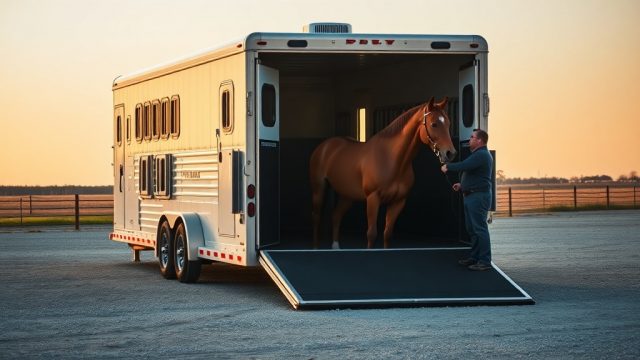
Why Is Loading Ramp Safety Critical for the Equi-Spirit 2 Horse Bumper Pull?
Every time a horse steps onto the ramp of an Equi-Spirit 2 Horse Bumper Pull, the potential for injury is present. A misstep, a slip, or a sudden spook can lead to painful falls for both horse and handler. This guide focuses on proven loading-unloading-techniques to prevent common injuries, specifically tailored to the Equi-Spirit’s solid ramp and bumper-pull geometry. Understanding these techniques not only protects your horse but also extends the trailer’s lifespan and keeps your equestrian season productive.
What Is the Correct Ramp Angle for the Equi-Spirit 2 Horse Bumper Pull?
The Equi-Spirit 2 Horse Bumper Pull features a fixed ramp that slopes from the ground to the trailer floor. For safe loading, the recommended ramp angle is between 18° and 22° from horizontal. Angles steeper than 25° increase the risk of a horse stumbling, especially if the ramp surface is wet or icy. Lighter horses (under 400 kg) can handle slightly steeper angles, but draft crosses (over 650 kg) benefit from a gentler slope. Adjust the trailer’s parking position—on level ground with the parking brake engaged—to achieve this angle. Always check that the ramp lip contacts the ground evenly to prevent a pronounced step-up.
How Do You Prepare a Horse for Loading Onto the Equi-Spirit Ramp?
Successful loading-unloading-techniques start before the trailer is parked. Begin training 5–10 minutes at home, using positive reinforcement. Lead the horse to the ramp, let it sniff the surface, and reward calm behavior. For the Equi-Spirit 2 Horse Bumper Pull, ensure the ramp is clean of mud or debris—a hose rinse and dry brush take 2 minutes. Use a rope halter rather than a flat halter for better control; the horse should follow a subtle pressure-release cue. Never force a horse onto the ramp—this creates panic. If the horse hesitates, back it up and approach again. A companion horse that loads easily can be left inside the trailer to encourage the nervous one.
What Loading-Unloading-Techniques Prevent Hind Leg Injuries on the Ramp?
Hind leg injuries, such as hoof cracks or hock strain, are common when horses rush off the ramp. For the Equi-Spirit 2 Horse Bumper Pull, the key is slow, deliberate movement. When unloading, open the butt bar first, then the ramp gate. Wait for the horse to look back and shift weight backward—this signals readiness to back out. Lead from the shoulder, not the front, and use a verbal cue like “back” in a low tone. If the horse pulls forward, stop entirely and reset. Avoid jerking the lead rope; instead, apply steady pressure. For loading, walk the horse straight at the ramp at a steady pace—no quick turns. The ramp’s rubberized tread (standard on recent Equi-Spirit models) provides grip, but wet conditions require extra care: spray the ramp with a non-slip solution or lay a rubber mat.
How Does Ramp Maintenance Affect Safety for the Equi-Spirit 2 Horse Bumper Pull?
Regular maintenance prevents ramp-related injuries. The Equi-Spirit’s aluminium ramp can develop loose bolts or worn hinges over time, leading to uneven gaps or wobbling. Inspect the ramp monthly: check for cracks, burrs, or sharp edges that could cut a horse’s leg. Apply a silicone-based lubricant to the hinge pins every 3 months (cost: about £12 per can). The ramp’s bottom edge should sit flush with the ground; if it leaves a >2cm gap, a horse’s hoof can catch. Tighten or replace bumper stops as needed—genuine Equi-Spirit parts cost £35–£50 per set. Use a wire brush to remove rust from hinges before lubricating. For winter use, add a grit-covered non-slip coating (e.g., TractionGrip, £28 per 5-litre tub) to the ramp surface every 6 months.
How Do You Avoid Common Handler Injuries While Using the Ramp?
Handler injuries—like back strain or crushed toes—are common when loading-unloading-techniques are rushed. For the Equi-Spirit 2 Horse Bumper Pull, always stand beside the horse’s shoulder, never directly in front or behind. When the ramp is wet or icy, wear studded boots for grip (cost: £45–£80). Use a long lead rope (minimum 1.8m) to maintain distance during backing out. Never wrap the rope around your hand; a horse that pulls forward can cause rope burns or dislocated fingers. If the horse is reluctant to load, use a lunge line to apply gentle pressure from a safe distance. Keep children and other animals away from the ramp area—dogs underfoot are a trip hazard. A second handler on the ramp’s other side provides better control for large horses (over 600 kg).
What Does the Severity of Common Ramp Injuries Look Like for the Equi-Spirit?
| Injury Type | Severity (1–5) | Common Cause | Prevention Technique | Vet Cost (GBP) |
|---|---|---|---|---|
| Hoof crack or chip | 2 | Hoof catch on ramp edge | Maintain flush ramp/ground fit | £80–£150 |
| Hock strain or sprain | 3 | Rushing off ramp at angle | Use slow backing cue; widen ramp exit | £120–£300 |
| Knee or fetlock laceration | 4 | Sharp ramp edge or burr | Monthly ramp edge inspection+ filing | £200–£600 |
| Falling/sliding on wet ramp | 4 | Low traction icy/muddy surface | Apply non-slip coating or winter mat | £150–£500 |
| Handler back strain | 2 | Bending while lifting ramp gate | Use two-handed lift; avoid twisting | £50–£200 (physio) |
Equi-Spirit 2 Horse Bumper Pull Ramp Safety: What Owners Say
UK owners of the Equi-Spirit 2 Horse Bumper Pull consistently praise the ramp’s solid construction but underline the need for careful loading-unloading-techniques. Sarah from Cheshire reports: “After using the Equi-Spirit 2 Horse Bumper Pull Hitch Weight Distribution Guide: Setup for Stability, I realised my trailer’s angle was too steep. Once I parked on level ground, loading became smooth.” Another owner, Mark from Devon, notes: “The OEM ramp hinge bolts loosened after 2 years. I now check them monthly—saved a mare from a nasty fall.” Some users add a rubber threshold mat (cost: £60 from trailer supply shops) to ease the step-up for older horses. Others recommend pairing the ramp safety routine with proper Equi-Spirit 2 Horse Bumper Pull Tire Inspection and Replacement Guide for all-around trailer security.
Frequently Asked Questions About Equi-Spirit 2 Horse Bumper Pull Ramp Safety
1. Can I load a draft horse onto the Equi-Spirit 2 Horse Bumper Pull ramp alone?
Yes, but it’s riskier for horses over 700 kg. Use a second handler to guide the horse’s hindquarters onto a non-slip ramp. The HorseTowPro Brake Controller Compatibility with Equi-Spirit Trailers: Which Models Work Best? article covers how proper braking prevents sudden stops that cause ramp instability.
2. What’s the maximum ramp angle for safely unloading a nervous horse?
Keep the ramp angle at 18° or below for nervous horses. Steeper angles (22°+) can cause them to scramble. Park the trailer slightly uphill if possible—this reduces the effective slope.
3. Should I use a loading ramp mat with the Equi-Spirit?
A high-quality rubber mat (6mm–10mm thick) reduces hoof slip by up to 75%. Ensure the mat is cut to fit the ramp width exactly—extra overhang can trip the horse. Cost: £30–£80 at equestrian retailers.
4. How often should I inspect the Equi-Spirit ramp hinges?
Every 30 days or 1,000 kilometres, whichever comes first. Look for cracks, loose bolts (torque to 25 Nm), and rust. Re-grease hinges using a lithium-based grease; see the HorseTowPro Trailer Axle Bearing Repack Guide for Equi-Spirit 2 Horse Bumper Pull for bearing maintenance parallels.
5. Can I modify the Equi-Spirit ramp to be longer?
No—the ramp is engineered for the trailer’s balance. Adding length increases the angle and lever stress on the hitch. Instead, improve ground contact by lowering the trailer’s tongue jack 3–5 cm.
6. What’s the best way to clean a wet ramp in winter?
Scrape off ice with a plastic shovel, then apply a calcium chloride de-icer (safe for aluminium). Avoid rock salt—it corrodes metal. After cleaning, lay a stable mat with grit for immediate traction.